(iii) [5 × 1]
(a) True
(b) False — wind-pollinated flowers are small, dull, and have no scent or nectar.
(c) True
(d) False — bacteria are prokaryotic.
(e) False — deficiency of vitamin C causes scurvy; rickets is caused by deficiency of vitamin D.
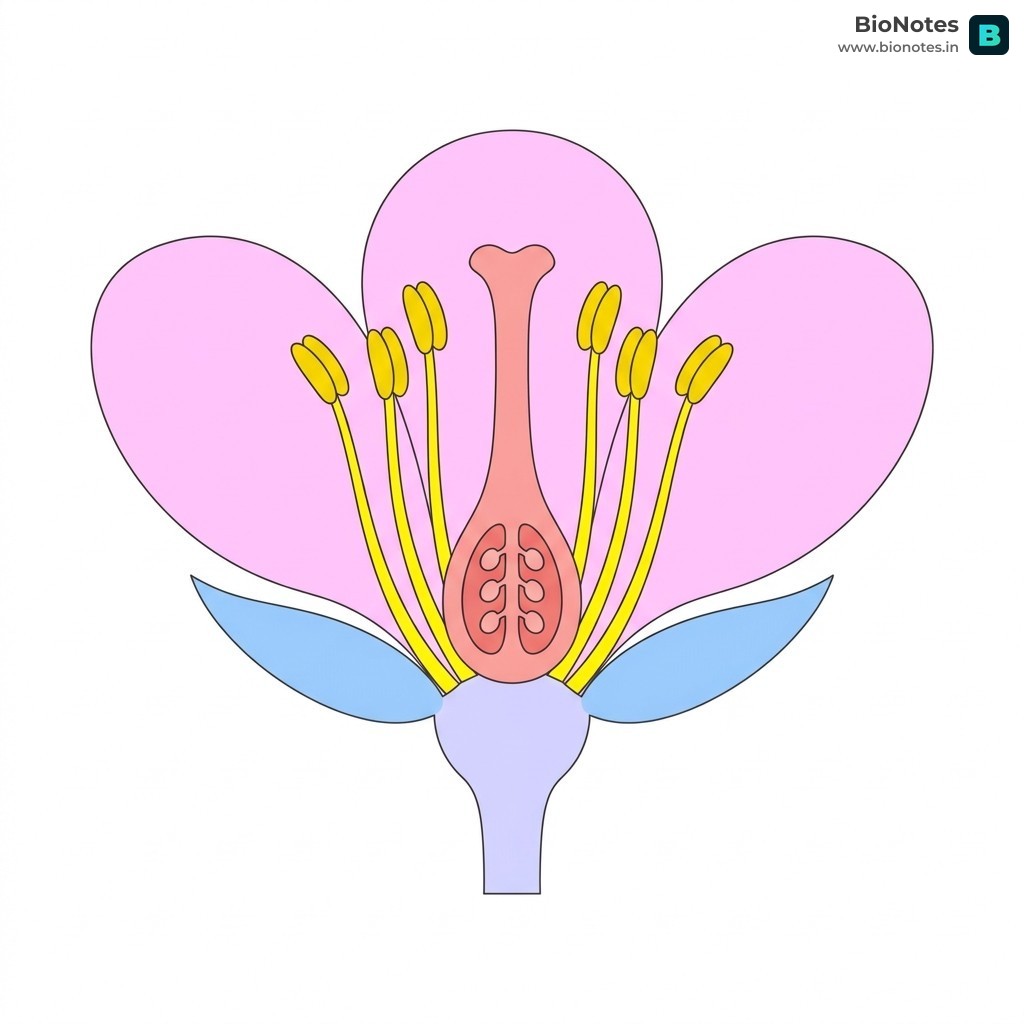
Pollen from the anther falls on the stigma of the same flower/plant
Pollen is transferred to the stigma of a flower of another plant of the same species
Does not need an external agent
Needs an agent like wind, water or insects
Offspring show less variation
Offspring show more variation and are stronger
(iii) [2] In double fertilisation, one male gamete fuses with the egg to form the zygote [1], and the other male gamete fuses with the two polar nuclei (triple fusion) to form the endosperm nucleus [1].
(iv) [2](any two)
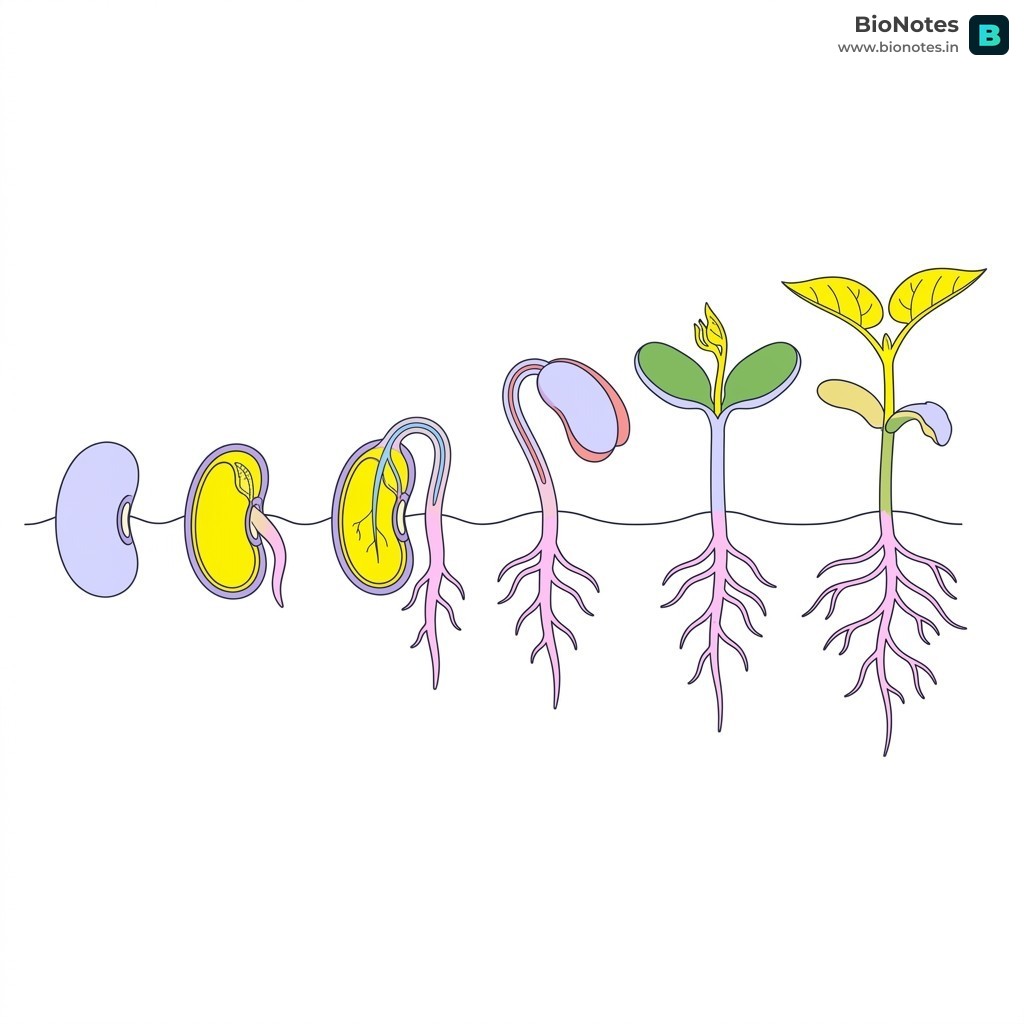
Hypogeal germination
Epigeal germination
Cotyledons remain below the ground
Cotyledons are brought above the ground
Hypocotyl does not elongate
Hypocotyl elongates
Example: maize, gram, pea
Example: bean, castor, cotton
(v) [3] Conditions: water, air (oxygen), suitable temperature [1½]. Any one experiment explained [1½] — e.g. air: seeds in a flask with pyrogallic acid and KOH (no air) do not germinate, while seeds in the control flask do; water: dry seeds on cotton without water do not germinate.
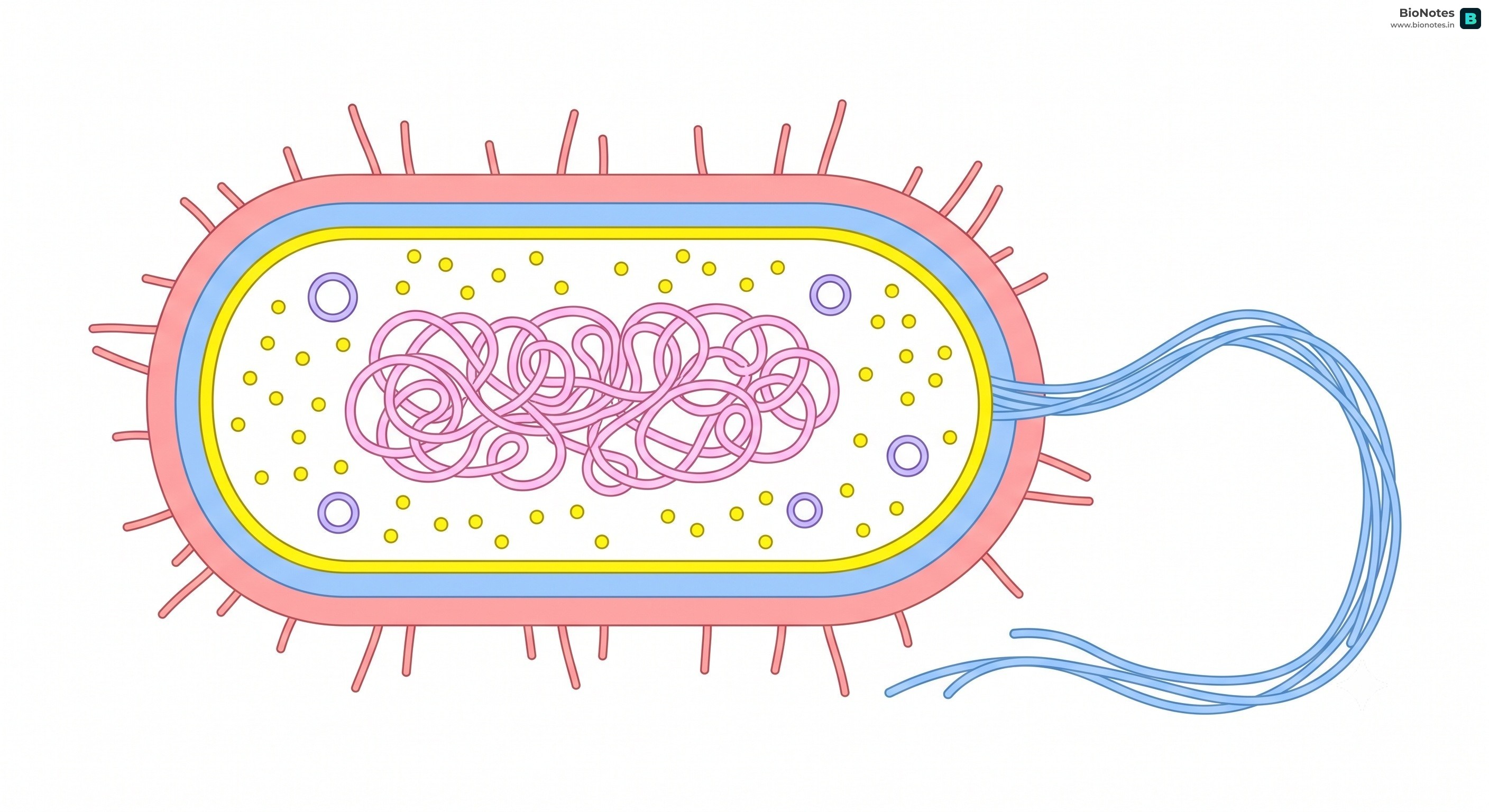
(ii) [2](any two) Curdling of milk (Lactobacillus); nitrogen fixation in root nodules (Rhizobium); production of antibiotics and vaccines; decomposition of dead matter; sewage treatment; curing of tea and tanning of leather.
Interactive Diagram•study Mode
||
www.bionotes.in
(iii) [2](any two) Yeast is used in baking bread and brewing; fungi are used to make antibiotics (penicillin); edible mushrooms are used as food; cheese processing; decomposers.
(ii) [2] A balanced diet contains all the nutrients (carbohydrates, proteins, fats, vitamins, minerals, water and roughage) in the right proportions [1]. It is important to supply energy, promote growth and repair, and prevent deficiency diseases [1].
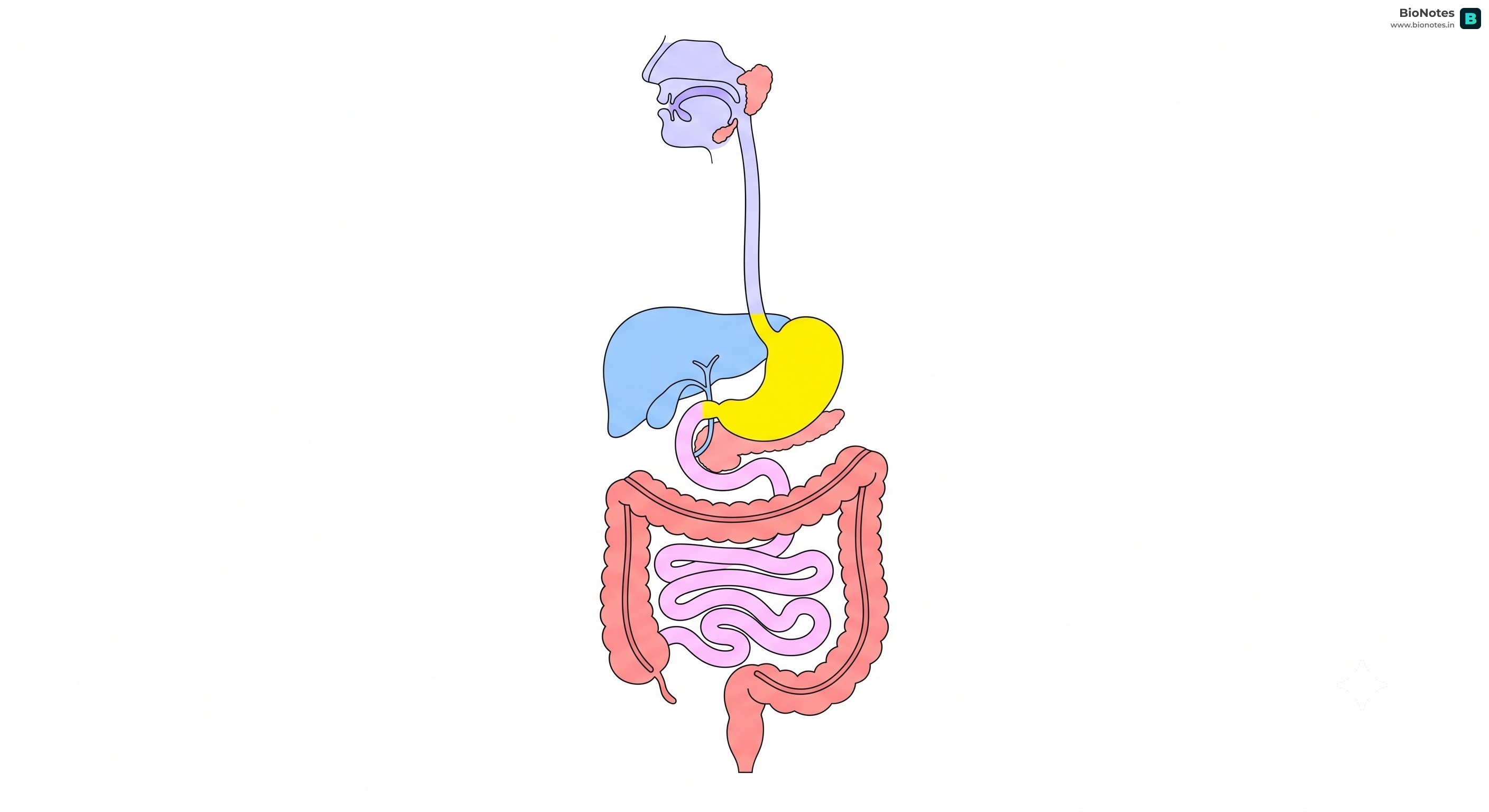
(iii) [2] (a) Bile emulsifies fats and makes the food alkaline [1]; (b) Hydrochloric acid kills germs in food and provides an acidic medium for pepsin to act [1].
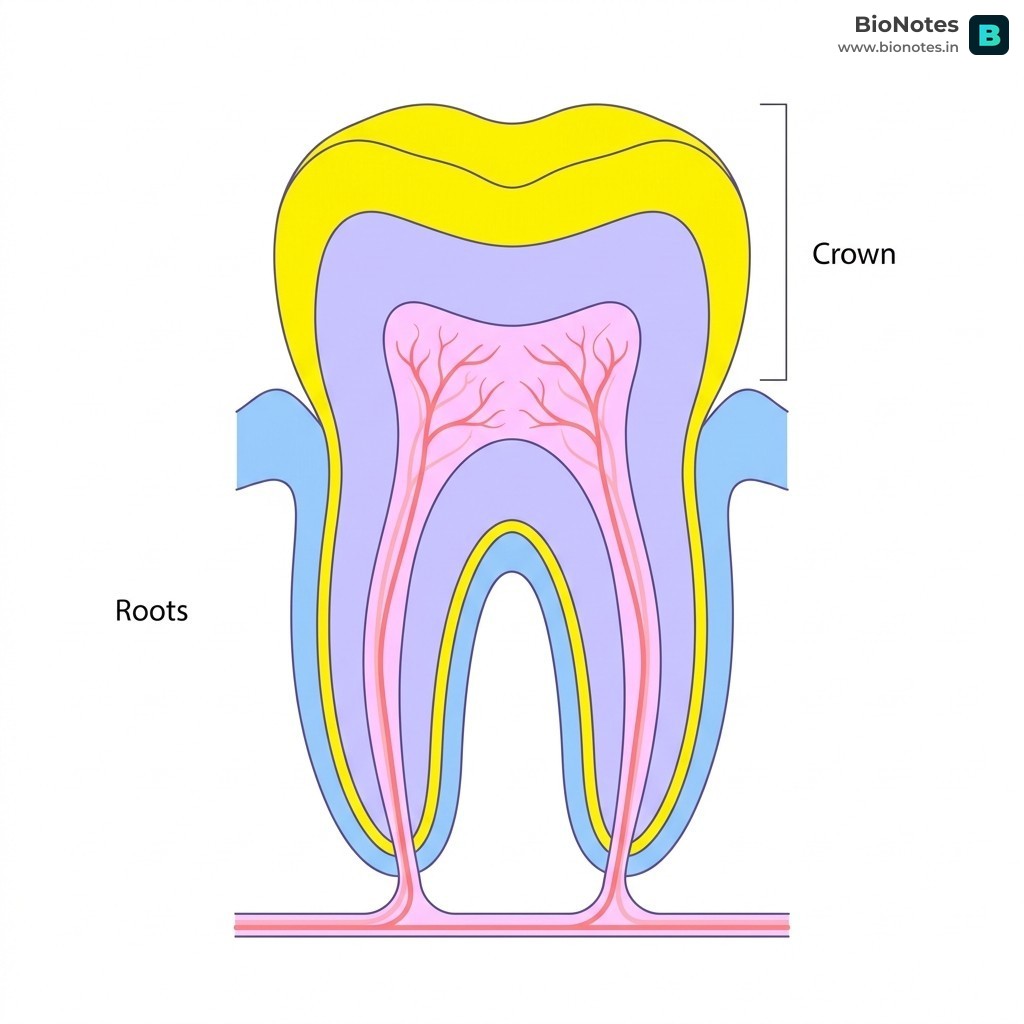
(iv) [2] I 2/2, C 1/1, PM 2/2, M 3/3 (= 32 teeth). (Correct formula 2 marks; if numbers are right but notation is incomplete, 1 mark.)
Interactive Diagram•study Mode
||
www.bionotes.in
(v) [3] Villi are finger-like projections of the small intestine wall [1]; they greatly increase the surface area for absorption [1]; each villus has a network of blood capillaries (and a lacteal), which absorb digested food into the blood [1].