(iii) [5 × 1](½ mark for odd one out + ½ mark for category)
Odd one out
Category of remaining three
(a)
Spinal cord
Parts of the brain
(b)
Insulin
Plant growth regulators (plant hormones)
(c)
Transpiration
Tropic movements in plants
(d)
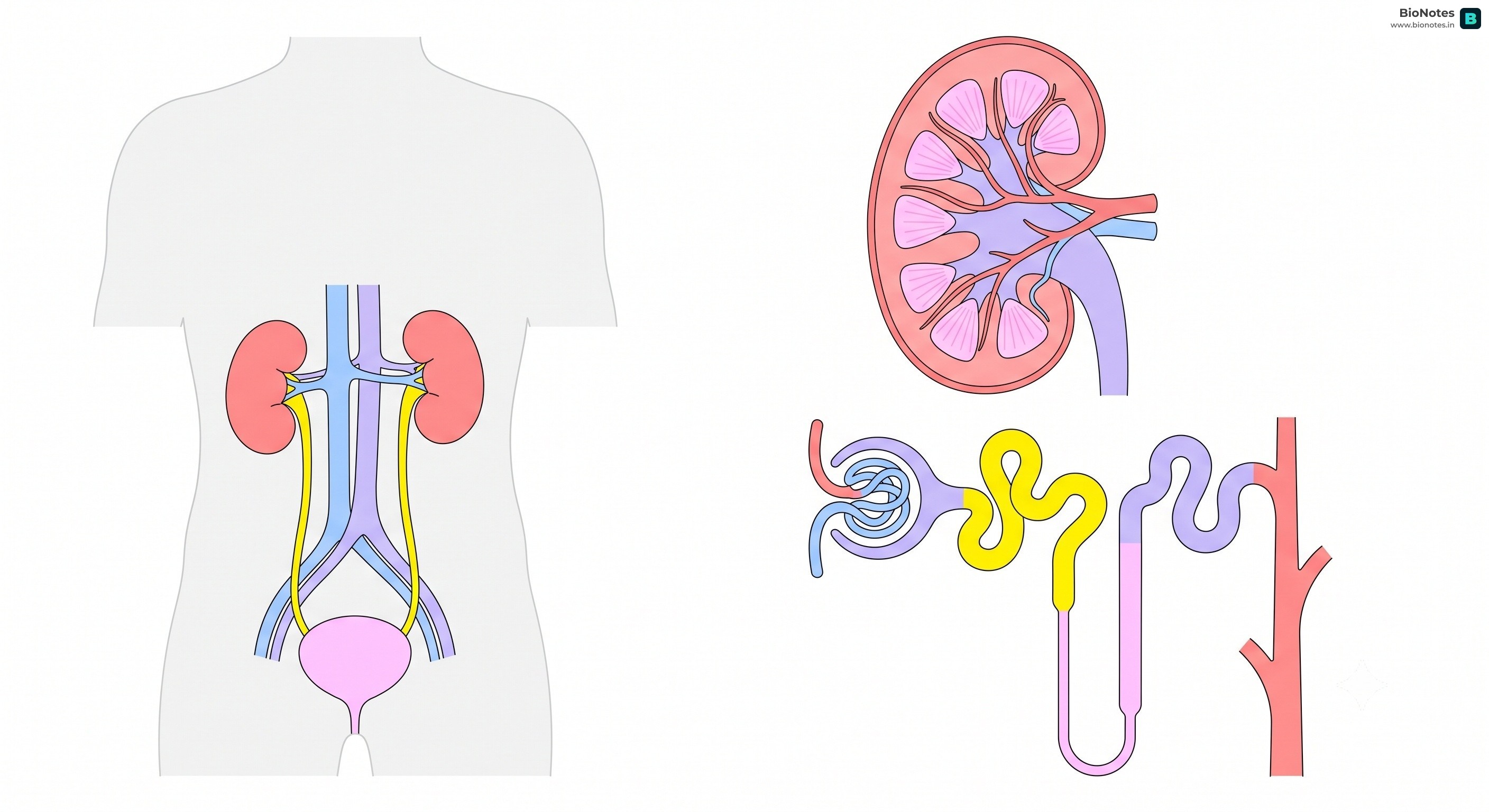
Ureter
Parts of a nephron
(e)
Nitrogen
Greenhouse gases
(iv) [5 × 1]
(a) Reflex action (natural / involuntary reflex)
(b) Spinal cord
(c) Sensory (afferent) neuron
(d) Any one: A reflex action is involuntary and rapid, controlled by the spinal cord, whereas a voluntary action is under conscious control of the cerebrum and is slower.
(e) Any one: Salivation at the sight/smell of food; a cyclist applying brakes on seeing an obstacle; typing/driving habits.
(ii) [2] Osmosis is the movement of water (solvent) molecules from a region of higher water concentration (lower solute concentration) to a region of lower water concentration (higher solute concentration) through a selectively permeable membrane.
(iii) [2] The level will not rise [1]. Boiling kills the cells and destroys the selectively permeable nature of the cell membrane, so osmosis cannot occur [1].
(iv) [2](any two, 1 mark each)
Osmosis
Diffusion
Movement of solvent (water) only
Movement of any type of molecules (solid, liquid, gas)
Requires a selectively permeable membrane
Does not require a membrane
Occurs through a membrane from dilute to concentrated solution
Occurs from higher to lower concentration of the diffusing substance
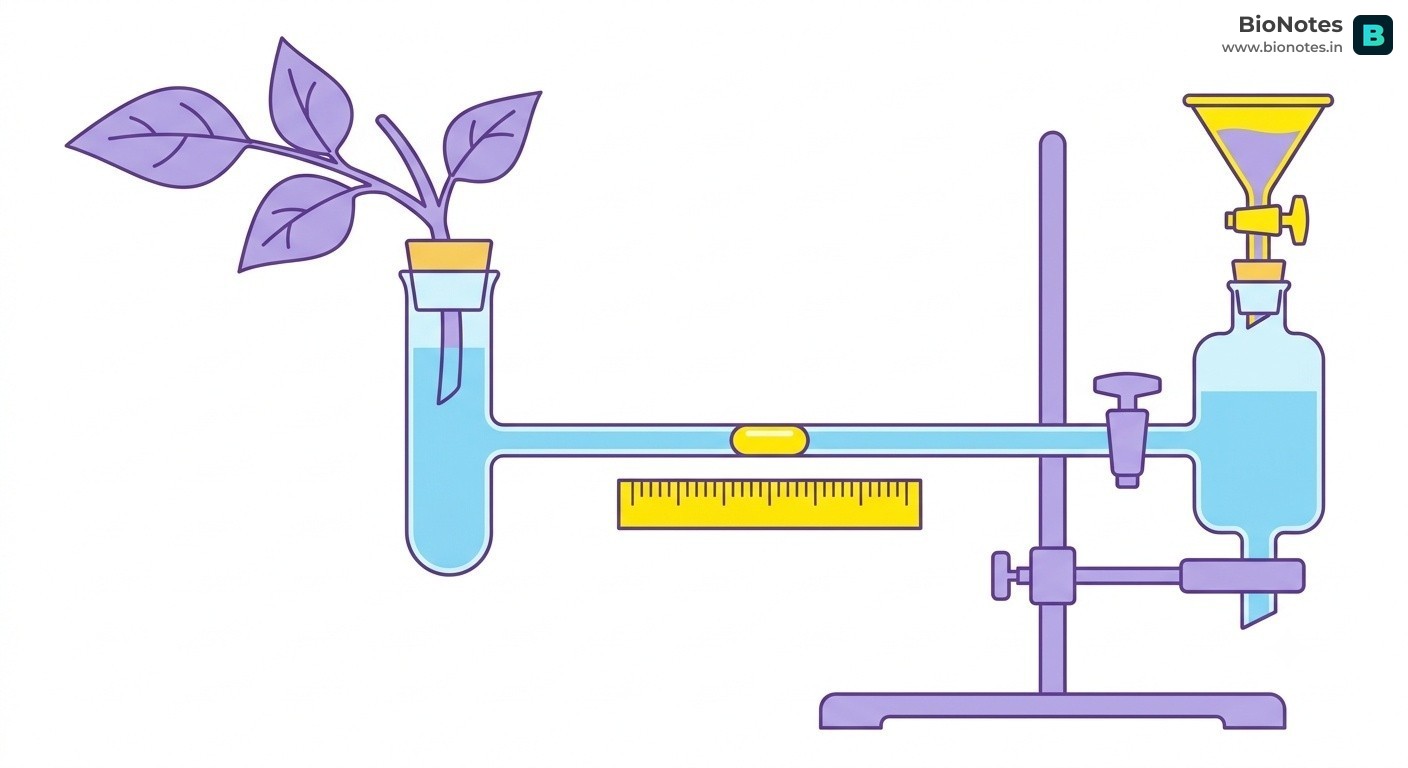
(v) [3] Diagram of Ganong's potometer — 1 mark for correct diagram, 2 marks for any four correct labels.
Interactive Diagram•study Mode
||
www.bionotes.in
Labels: Plant shoot, Water reservoir, Capillary tube, Air bubble, Beaker of water, Stopcock.
(iii) [2](any two) Melting of polar ice caps/glaciers; rise in sea level and flooding of coastal areas; change in rainfall pattern/climate; spread of diseases; damage to crops.
(v) [3](any three, 1 mark each) Use of unleaded petrol/CNG in vehicles; switching off engines at traffic signals; social forestry/planting trees; following Euro Bharat vehicular standards; use of scrubbers and electrostatic precipitators in industries; using public transport.
(iv) [2] Male: X and Y; Female: X and X [1]. The father determines the sex of the child, as he produces two types of sperm (X-bearing and Y-bearing) [1].
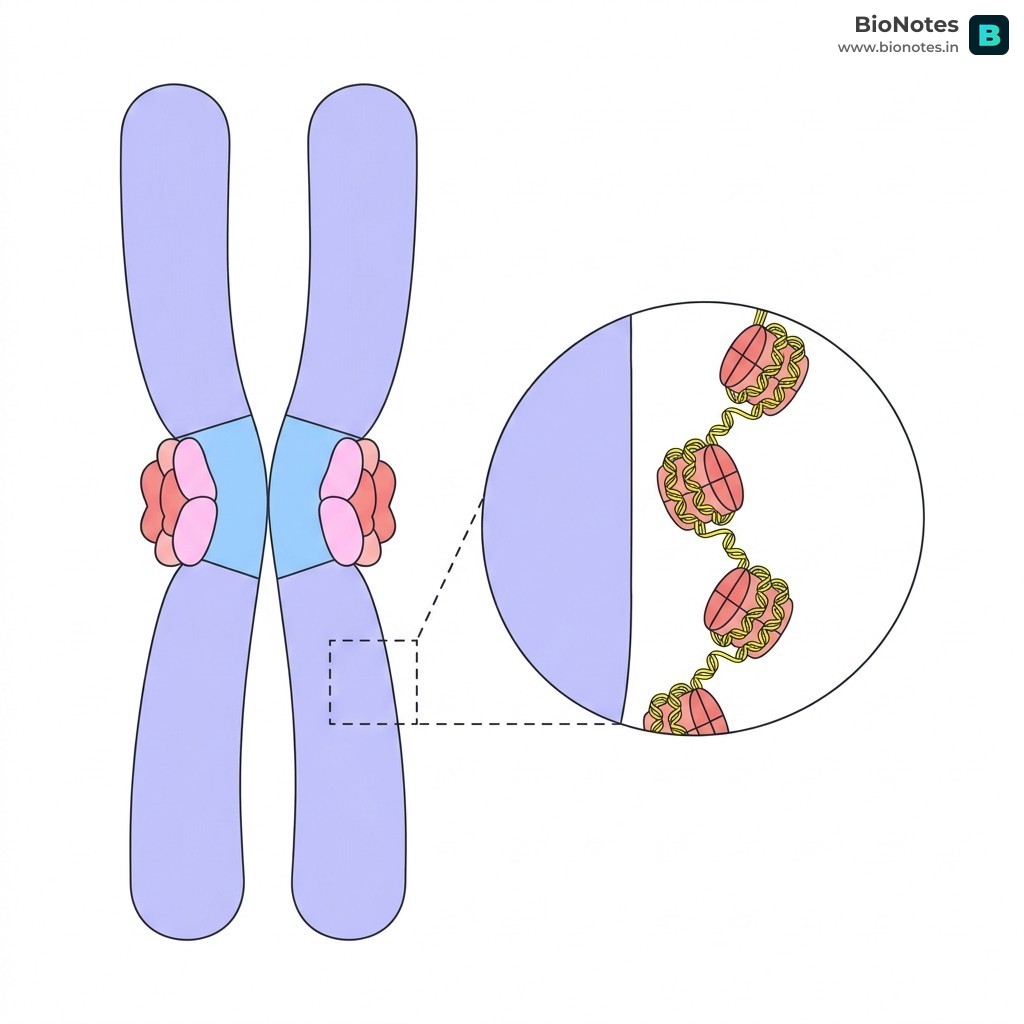
(v) [3] 1 mark for correct diagram, 2 marks for any four correct labels.
Interactive Diagram•study Mode
||
www.bionotes.in
Labels: Centromere, Sister chromatids, Telomere, Short (p) arm, Long (q) arm, Kinetochore.
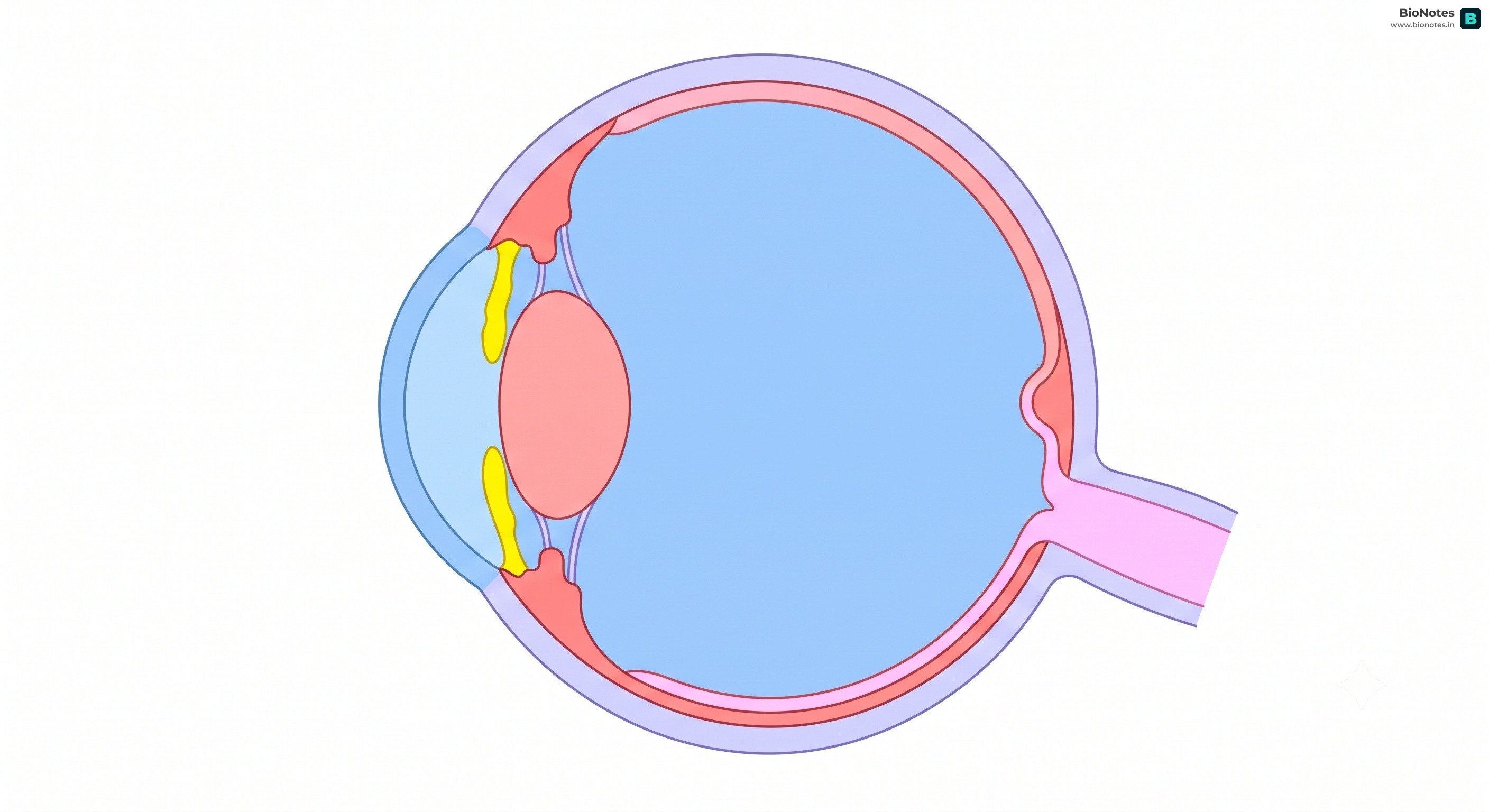
(ii) [2] Accommodation is the ability of the eye to adjust the focal length of the lens so that clear images of objects at different distances are formed on the retina [1]. It is brought about by the ciliary muscles [1].
(iii) [2] Cause: elongation of the eyeball (or an excessively convex lens), so the image forms in front of the retina [1]. Correction: concave lens [1].
(iv) [2] The blind spot is the point on the retina where the optic nerve leaves the eye [1]. It is called so because it has no rods or cones and hence no vision is possible there [1].
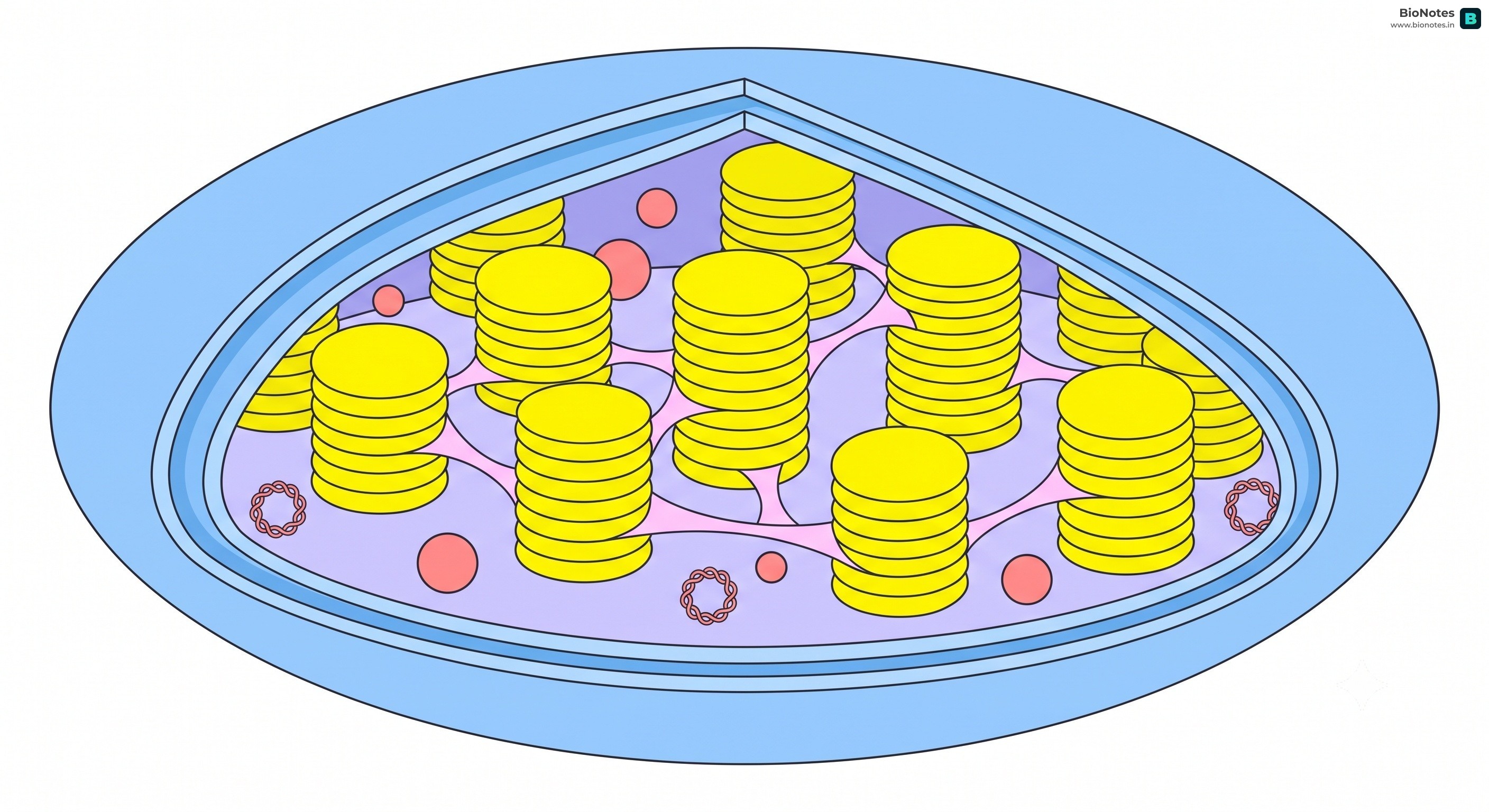
(v) [3] 1 mark for correct diagram, 2 marks for any four correct labels.
Diagrams in the marking scheme are from the BioNotes diagram bank. Question–answer design by the BioNotes teaching team; syllabus alignment: CISCE ICSE 2027 Biology (Science Paper 3).