(xv) Natality = 60 / 1500 = 0.04 per individual per year.
(xvi) (a) Adenosine Deaminase [½]; (b) Sutton and Boveri [½].
(xvii)Taq polymerase is thermostable, so it remains active during the high-temperature denaturation step and synthesises the new DNA strand (extension, ~72 °C) using the primers.
(xviii) (a) The large, feathery stigma helps to trap the light, non-sticky pollen grains carried by wind [1].
(b) Males have only one X chromosome (hemizygous), so a single recessive allele is expressed; a female needs two recessive alleles (homozygous recessive) to show the disorder [1].
(i) (a) Adenosine deaminase (ADA) [1].
(b) Lymphocytes from the patient's blood are grown in culture; a functional ADA gene (cDNA) is introduced into them using a retroviral vector and the cells are returned to the patient [1]. (For permanent cure, the gene is introduced into the bone marrow/early embryonic cells.)
OR
(ii) (a) Parents: I^A i × I^B i. Possible children: I^A I^B (AB), I^A i (A), I^B i (B), ii (O) [1].
(b) Probability of blood group O = ¼ (25%)[1].
(i) Methane (CH₄), ammonia (NH₃), hydrogen (H₂) and water vapour [1] (at ~800 °C with electric discharge). (ii) Amino acids (simple organic compounds) [1].
(i) Denaturation (~94 °C) → Annealing (~54 °C) → Extension (~72 °C) [1]. (ii) Primers are short single-stranded oligonucleotides complementary to the ends of the target DNA; they anneal to the template and provide a free 3′-OH end from which DNA polymerase begins synthesis [1]. (iii) 2⁵ = 32 copies[1].
(i) NPP is the amount of organic matter (biomass) available to consumers, i.e. Gross Primary Productivity minus the energy lost in respiration (NPP = GPP − R) [1]. (ii) NPP = GPP − R = GPP − 0.4 GPP = 0.6 GPP = 1200 ⇒ GPP = 2000 g/m²/year[1]; R = 0.4 × 2000 = 800 g/m²/year[1].
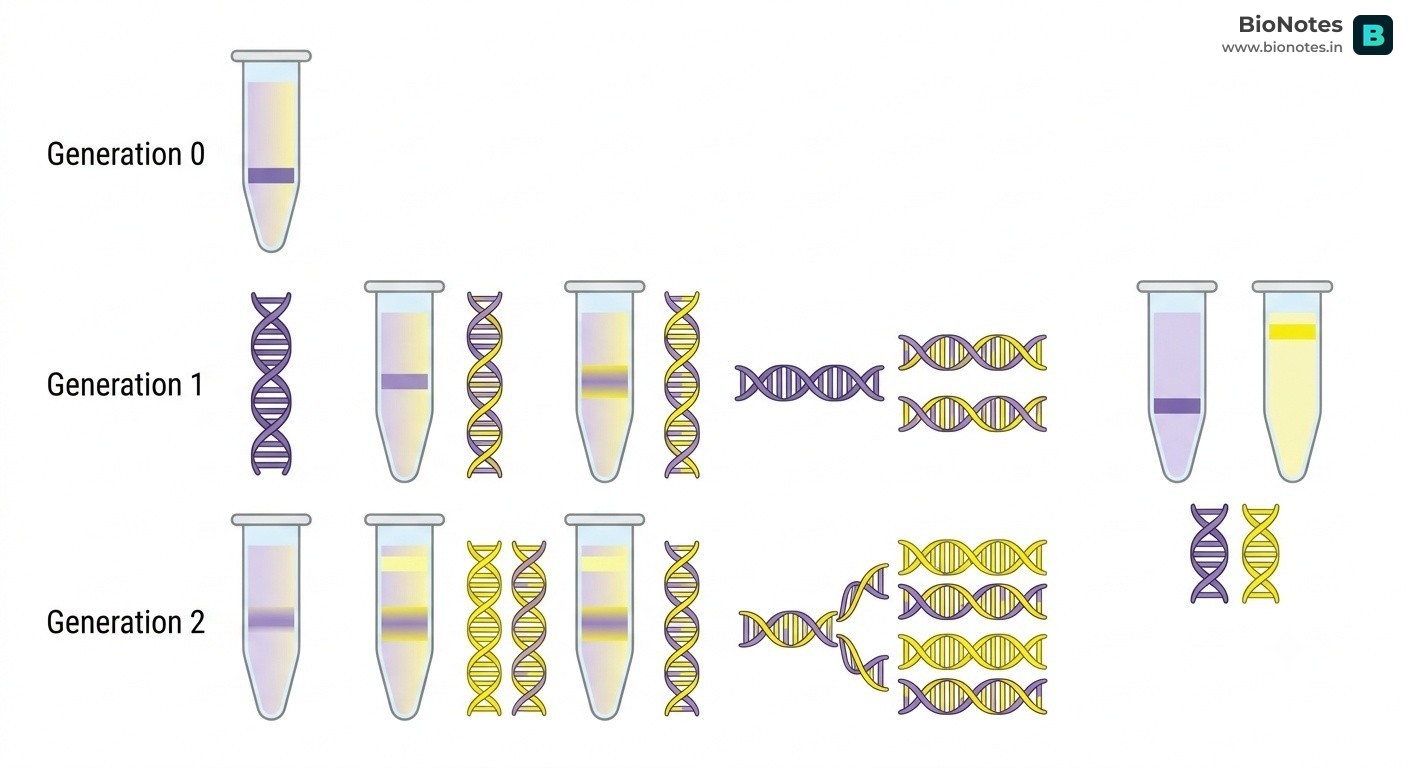
(i) Heavy nitrogen (¹⁵N) and light nitrogen (¹⁴N); E. coli[1]. (ii) After one generation (one round of replication in ¹⁴N medium), all the DNA was of intermediate (hybrid, ¹⁵N/¹⁴N) density [1]. (iii) DNA replication is semi-conservative — each daughter DNA has one old (parental) strand and one newly synthesised strand [1].
Other floral parts (e.g. thalamus, calyx, peduncle) also contribute to the fruit
Example: mango / tomato / coconut
Example: apple / pear / strawberry / cashew
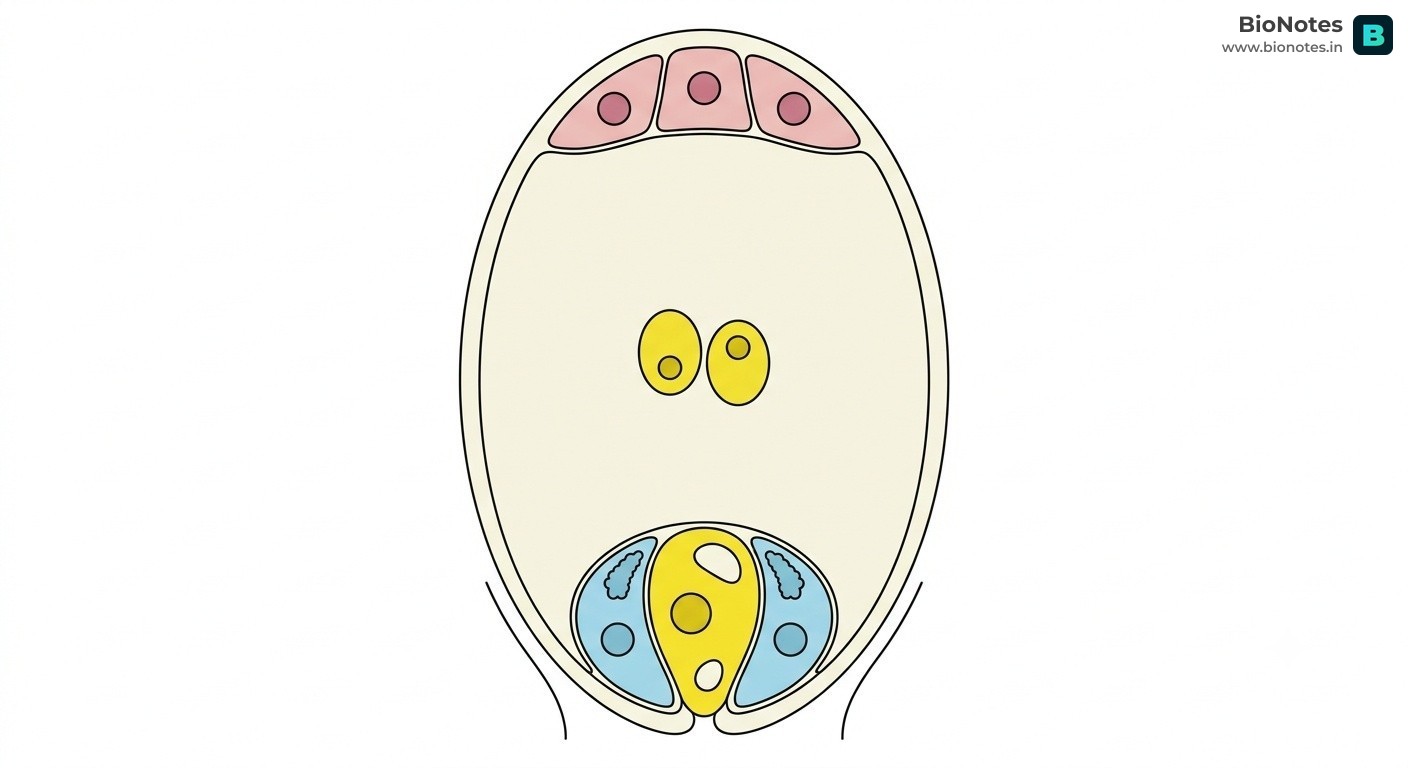
(b) Double fertilisation: one pollen tube enters the embryo sac and releases two male gametes [½]. One male gamete fuses with the egg cell (syngamy) to form the diploid zygote [½]. The other male gamete fuses with the two polar nuclei (triple fusion) to form the triploid primary endosperm nucleus [1].
(c) Perisperm is the persistent remnant of the nucellus in a seed (e.g. black pepper, beet) [1].
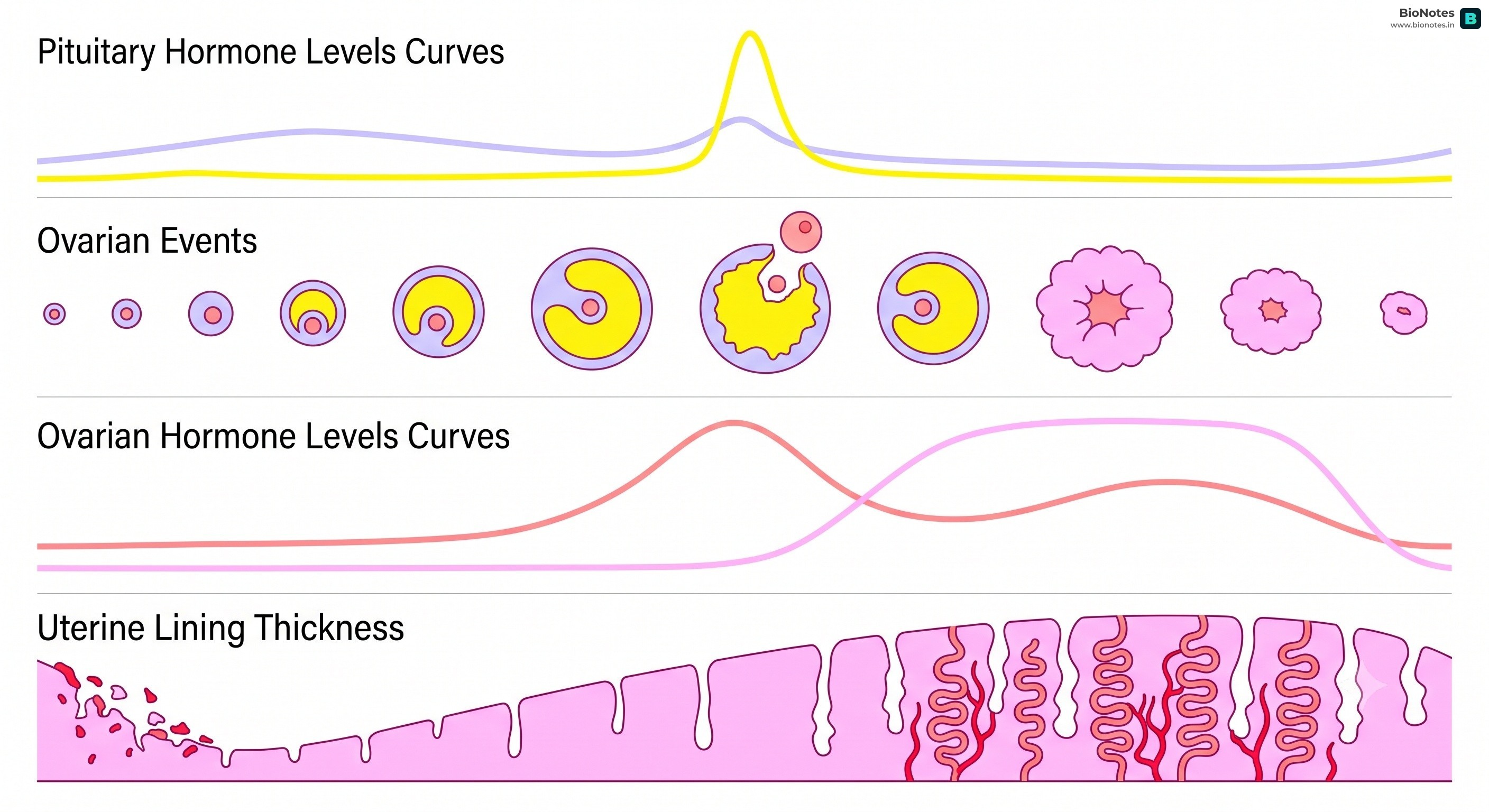
(i)(1 mark for each phase + 1 mark for correct hormonal interrelationship)
Interactive Diagram•study Mode
||
www.bionotes.in
Menstrual phase (days 1–5): Fall in progesterone and oestrogen causes the endometrium to break down and be shed with blood and tissue.
Follicular (proliferative) phase (days 6–13): Pituitary FSH stimulates the growth of the follicle, which secretes increasing amounts of oestrogen; oestrogen repairs and thickens the endometrium.
Ovulatory phase (~day 14): A surge of LH (with FSH) causes rupture of the Graafian follicle and release of the ovum.
Luteal (secretory) phase (days 15–28): LH converts the ruptured follicle into the corpus luteum, which secretes progesterone (and some oestrogen) to maintain the endometrium for implantation.
If fertilisation does not occur, the corpus luteum degenerates, hormone levels fall and menstruation begins again. Negative/positive feedback of oestrogen and progesterone on the hypothalamus and pituitary regulates the cycle.
OR
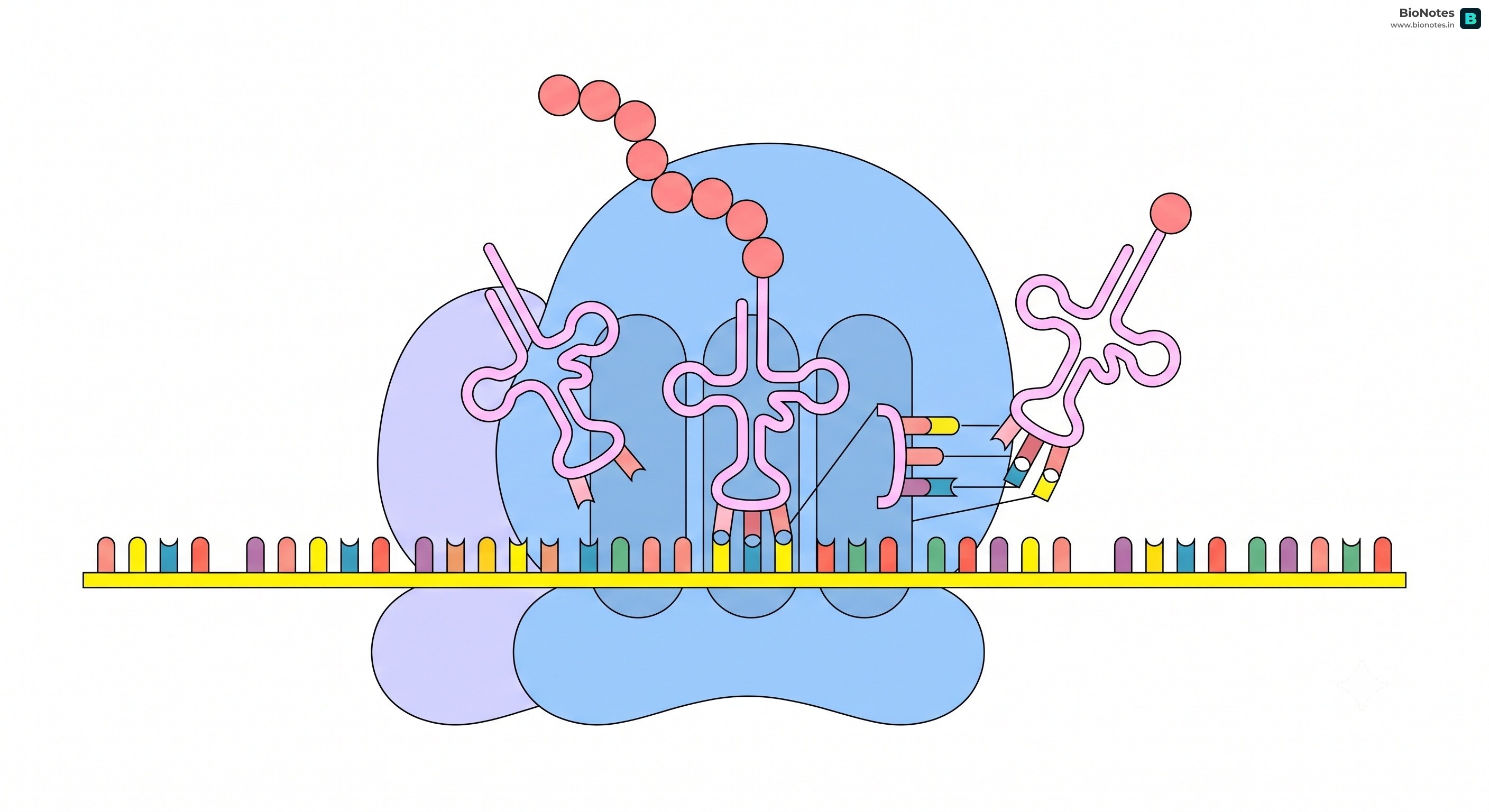
(ii) Translation in prokaryotes:
Interactive Diagram•study Mode
||
www.bionotes.in
Charging of tRNA [1]: Amino acids are activated by ATP and attached to their specific tRNAs by aminoacyl-tRNA synthetase, forming aminoacyl-tRNA.
Initiation [1½]: The small ribosomal subunit binds to the mRNA; the initiator tRNA (carrying formyl-methionine) pairs with the start codon AUG at the P-site; the large subunit then joins to form the functional ribosome.
Elongation [1½]: The next aminoacyl-tRNA enters the A-site by codon–anticodon pairing; a peptide bond forms between the amino acids (peptidyl transferase activity of rRNA); the ribosome moves one codon forward (translocation), shifting the tRNAs from the A-site to the P-site and then to the E-site. The cycle repeats.
Termination [1]: When a stop codon (UAA, UAG or UGA) reaches the A-site, release factors bind, the completed polypeptide is released, and the ribosome subunits dissociate.
Diagrams in the marking scheme are from the BioNotes diagram bank. Question–answer design by the BioNotes teaching team; syllabus alignment: CISCE ISC 2027 Biology (863) Class XII.