(iii) [5 × 1]
(a) True
(b) False — plant cells have a cell wall.
(c) False — digestion is completed in the small intestine; the large intestine absorbs water.
(d) True
(e) True
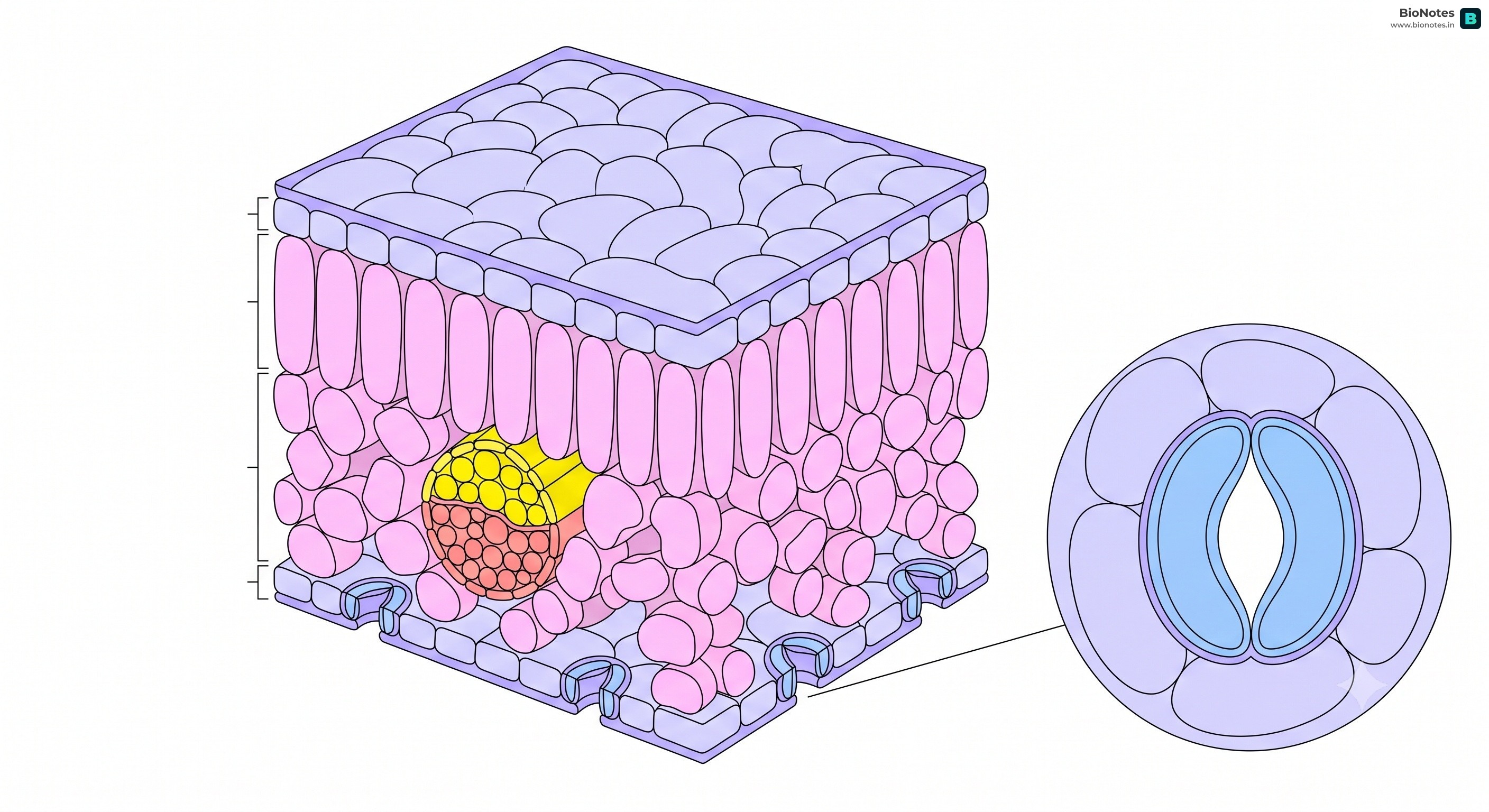
(v) [3](any three, 1 mark each) Prepares food by photosynthesis; exchange of gases through stomata; loss of excess water by transpiration; storage of food (e.g. onion scales); protection (e.g. spines in cactus).
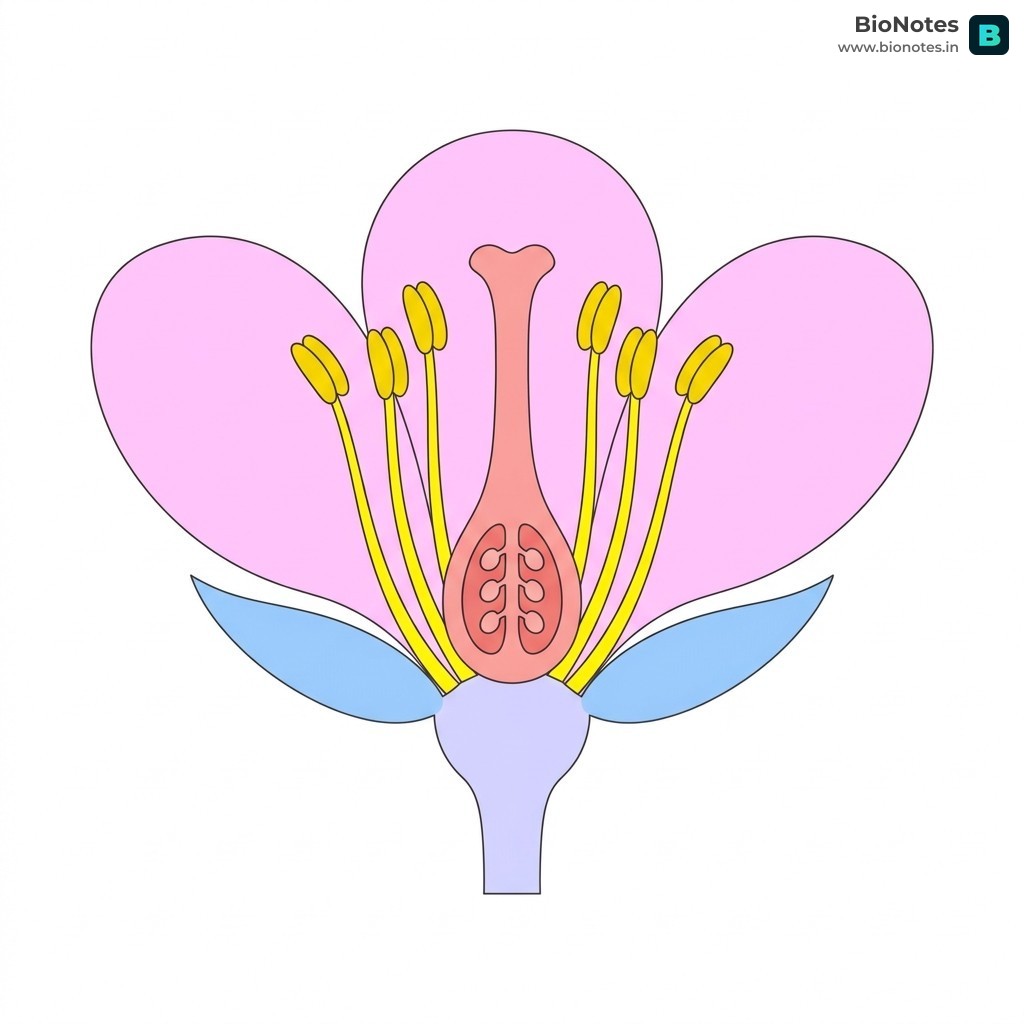
(ii) [2] Stigma, style and ovary (all three for 2 marks; two for 1 mark).
Interactive Diagram•study Mode
||
www.bionotes.in
(iii) [2] Pollination is the transfer of pollen grains from the anther to the stigma of a flower.
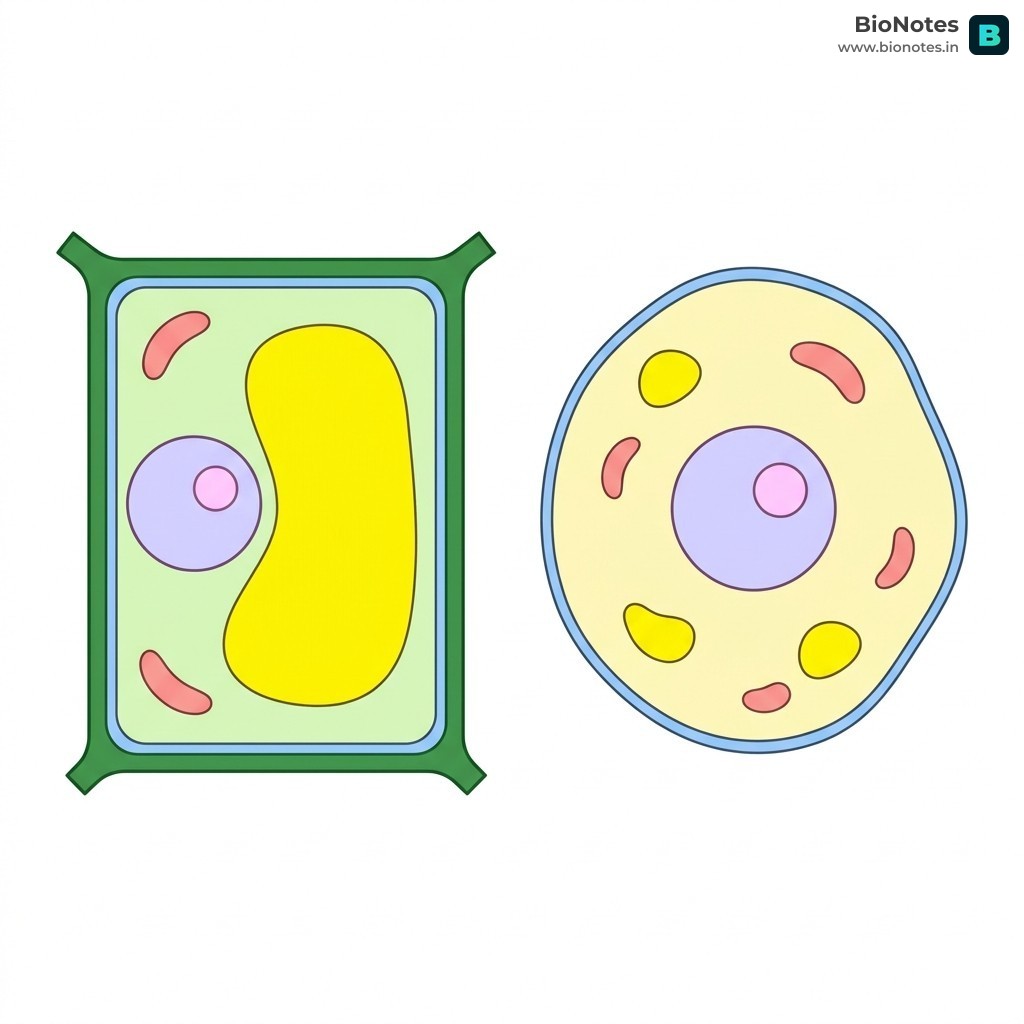
(iv) [2](any two, 1 mark each)
Plant cell
Animal cell
Cell wall present
Cell wall absent
Large central vacuole
Vacuoles small or absent
Chloroplasts present
Chloroplasts absent
(v) [3] (a) Nucleus: controls all the activities of the cell [1]. (b) Cell membrane: protects the cell and controls the entry and exit of substances [1]. (c) Vacuole: stores water, food and waste materials [1].
(ii) [2](any two) Salivary glands; liver; pancreas; gastric glands.
(iii) [2] Bile (produced by the liver and stored in the gall bladder) breaks large fat globules into tiny droplets (emulsification) [1], which helps in the digestion of fats [1].
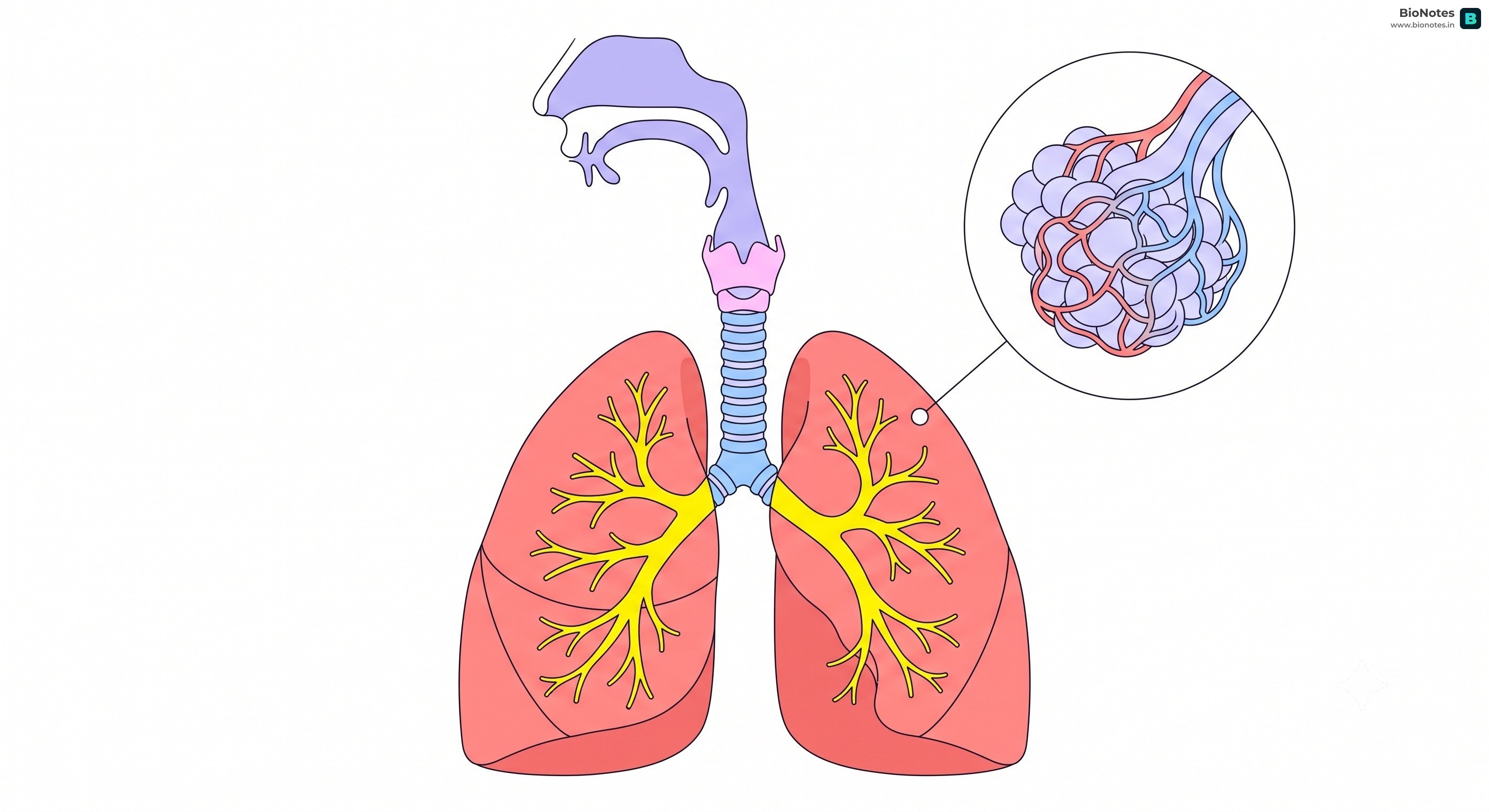
(iv) [2] Nose (nostrils) → pharynx → larynx → trachea → bronchi → lungs. (All stages in correct order for 2 marks; one mistake: 1 mark.)
(v) [3] The diaphragm contracts and moves downward (flattens) [1]; the ribs move upward and outward [1]; the chest cavity becomes larger, so air rushes into the lungs [1].
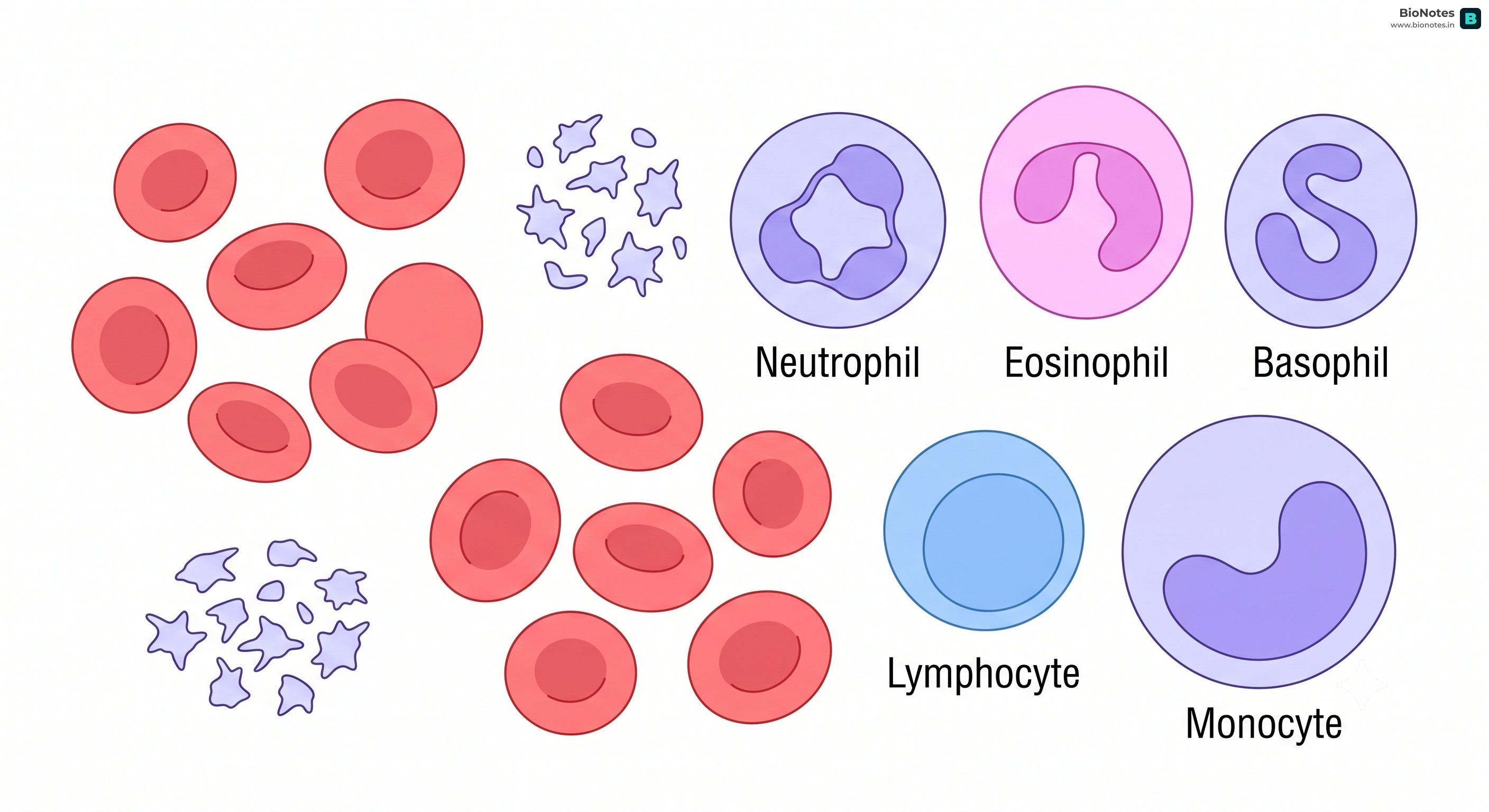
(ii) [2](any two) Plasma; red blood cells (RBCs); white blood cells (WBCs); platelets.
(iii) [2] (a) White blood cells fight germs / protect the body from diseases [1]; (b) Platelets help in clotting of blood (stop bleeding) [1].
Interactive Diagram•study Mode
||
www.bionotes.in
(iv) [2] Adaptation: a special feature or habit that helps an organism to survive in its surroundings [1]. Example: cactus has spines (leaves reduced to spines), thick fleshy stem to store water [1].
(v) [3](any three) Bathing daily; washing hands with soap before eating and after using the toilet; brushing teeth twice a day; trimming nails; wearing clean clothes; eating clean and covered food; drinking boiled/clean water.