(vii) After the S phase DNA is replicated, but the sister chromatids remain joined at the centromere; the chromosome number stays 46 and the chromatid number becomes 92.
(ii) [5 × 1]
(a) potassium
(b) endosmosis
(c) turgid
(d) open
(e) flaccid
(iii) [5 × 1](½ mark for odd one out + ½ mark for category)
Odd one out
Category of remaining three
(a)
Erythrocytes
White blood cells (leucocytes)
(b)
Insulin
Sex hormones
(c)
Cornea
Parts of the ear
(d)
Salivary gland
Endocrine glands
(e)
Sulphur dioxide
Greenhouse gases
(iv) [5 × 1]
(a) Myopia (short-sightedness)
(b) Any one: elongation of the eyeball; the eye lens being too convex/thick.
(c) Concave (diverging) lens
(d) In front of the retina
(e) Ciliary muscles
(i) [1] To show that the rate of transpiration is unequal on the two surfaces of a dorsiventral leaf.
(ii) [2] The blue paper turns pink [1], as cobalt chloride absorbs the water vapour released by the leaf [1].
(iii) [2] The paper on the lower surface turns pink faster [1], since the lower epidermis has more stomata than the upper epidermis [1].
(iv) [2] To prevent water vapour from the atmosphere from affecting the paper [1], and to keep the paper in close contact with the leaf surface [1].
(v) [3] 1 mark for correct diagram, 2 marks for any four correct labels. Expected labels: Bell jar, Potted plant, Polythene sheet covering the pot (soil), Glass plate, Vaseline (airtight seal), Water droplets on the inner wall of the bell jar.
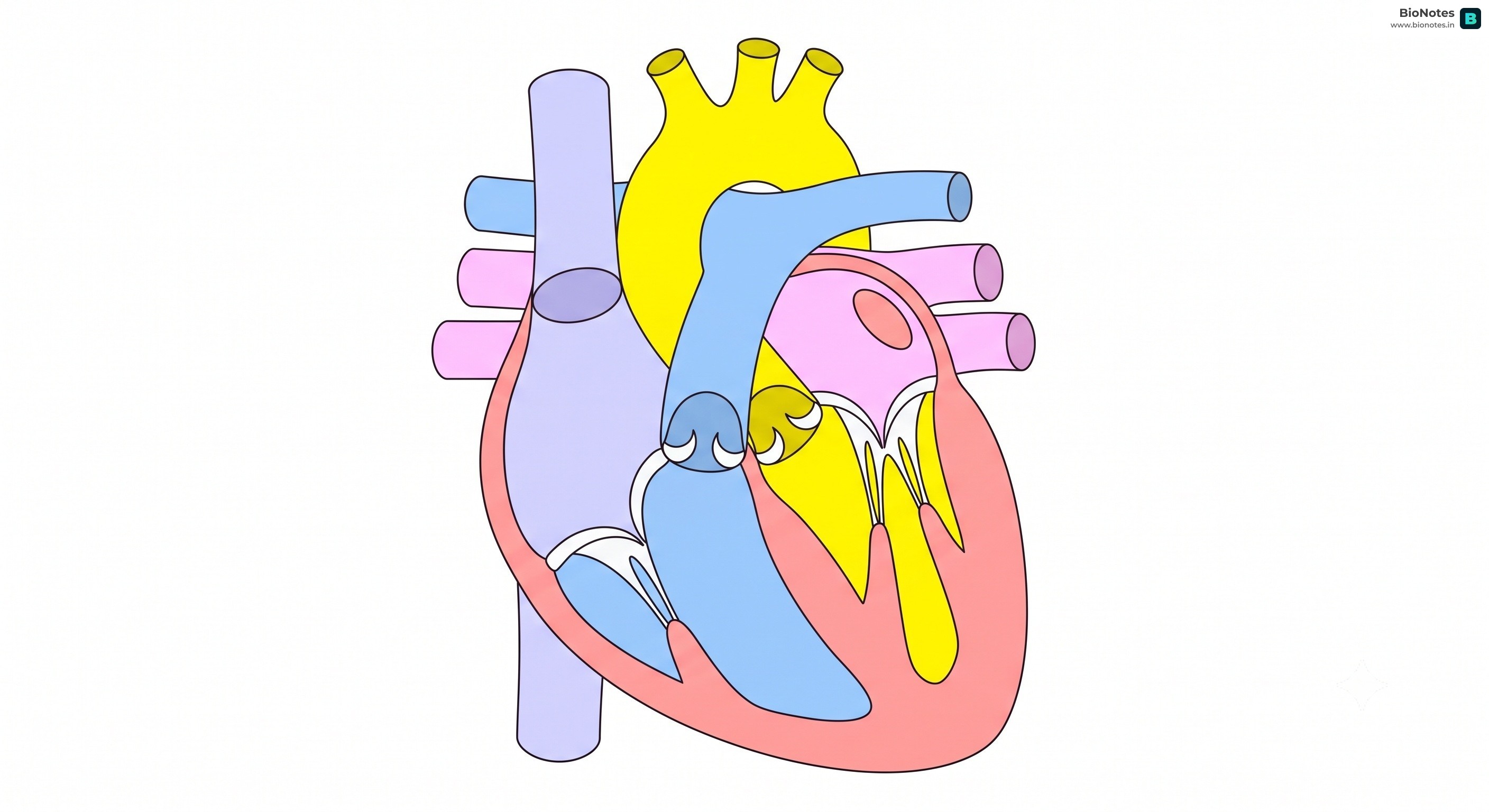
(ii) [2] The left ventricle pumps blood to the whole body, which requires a high pressure [1]; the right ventricle pumps blood only to the nearby lungs, so a thinner wall is sufficient [1].
(iii) [2] Bicuspid (mitral) valve [1]. It allows blood to flow from the left auricle to the left ventricle and prevents backflow [1].
(iv) [2] Double circulation: blood passes through the heart twice in one complete circuit of the body — once through the pulmonary circuit and once through the systemic circuit [1]. Advantage: oxygenated and deoxygenated blood do not mix, ensuring efficient supply of oxygen to tissues [1].
(v) [3] 1 mark for correct diagram, 2 marks for any four correct labels.
Interactive Diagram•study Mode
||
www.bionotes.in
Labels: Right atrium (auricle), Right ventricle, Left atrium (auricle), Left ventricle, Aorta, Pulmonary artery, Superior vena cava, Inferior vena cava, Bicuspid valve, Tricuspid valve, Septum.
(ii) [2] Insulin [1]; secreted by the pancreas (β-cells of the islets of Langerhans) [1].
(iii) [2] When blood glucose rises, insulin converts excess glucose into glycogen in the liver and muscles [1]. When blood glucose falls, glucagon converts glycogen back into glucose, raising the level [1].
(iv) [2](any two)
Endocrine glands
Exocrine glands
Ductless
Have ducts
Secretions (hormones) are released directly into the blood
Secretions are carried through ducts to the site of action
(i) [1] A reflex action is a sudden, involuntary and automatic response to a stimulus.
(ii) [2] Receptor → sensory neuron → spinal cord (relay neuron) → motor neuron → effector (muscle/gland). (All five stages in correct order for 2 marks; 1 mark if one stage is missed.)
(iii) [2] (a) Cerebellum: maintains balance/posture and coordinates voluntary muscular movements [1]; (b) Medulla oblongata: controls involuntary actions such as heartbeat, breathing, and swallowing/vomiting [1].
(iv) [2]
Natural reflex
Acquired reflex
Inborn, does not need learning
Developed by learning/experience
Example: withdrawing hand from a hot object
Example: salivation at the sight of food
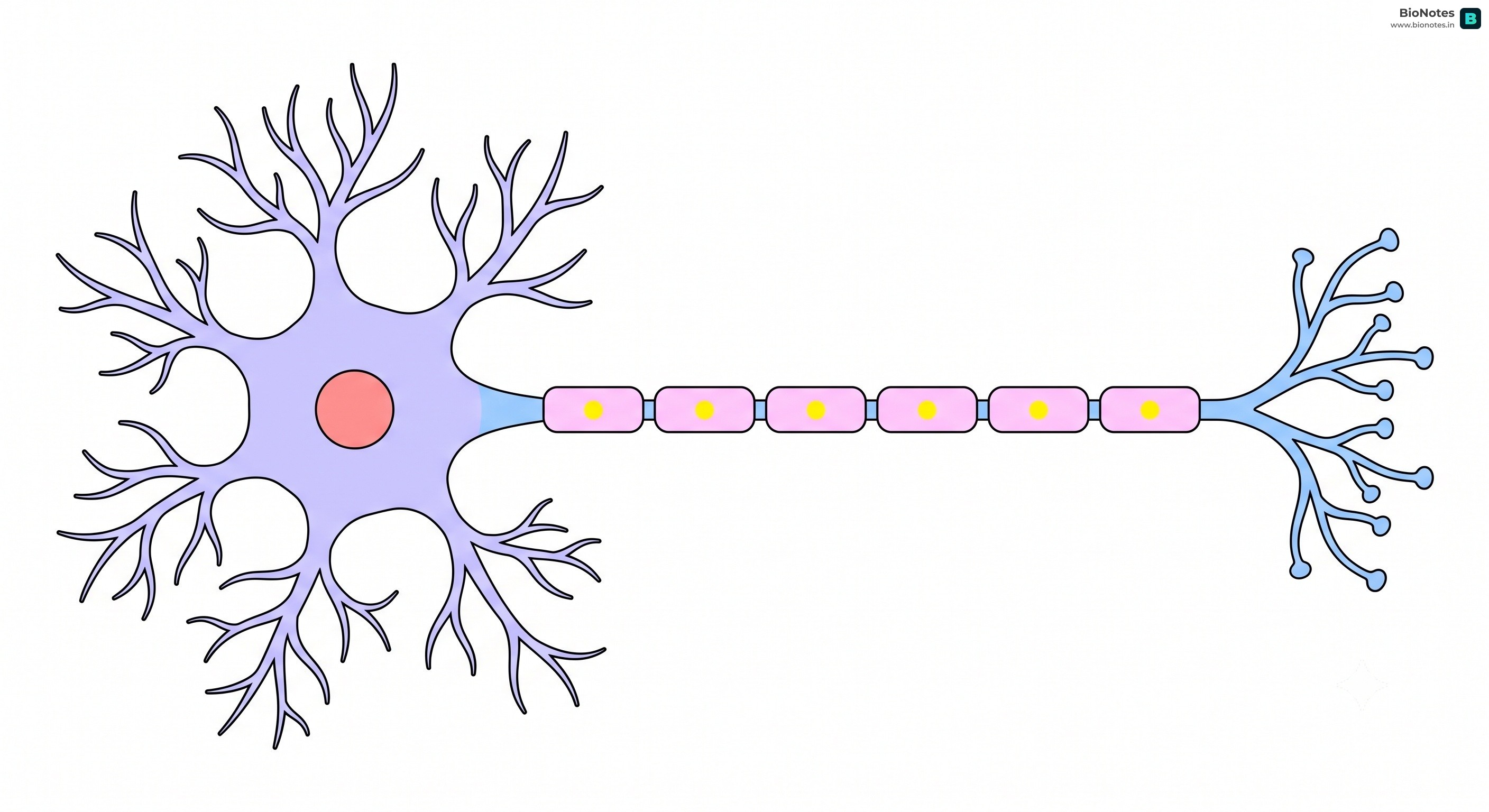
(v) [3] 1 mark for correct diagram, 2 marks for any four correct labels.
Interactive Diagram•study Mode
||
www.bionotes.in
Labels: Dendrites, Cell body (cyton/soma), Nucleus, Axon, Myelin sheath, Node of Ranvier, Schwann cell, Axon terminals (synaptic knobs).
(iii) [2] (a) Implantation: the embedding of the blastocyst in the endometrium (uterine wall) [1]; (b) Gestation: the period from fertilisation to birth (about 40 weeks / 9 months) [1].
(iv) [2](any two) Supplies nutrients and oxygen to the foetus; removes excretory waste (CO₂ and urea) from the foetus; secretes hormones (hCG, oestrogen, progesterone); acts as a barrier against some harmful substances.
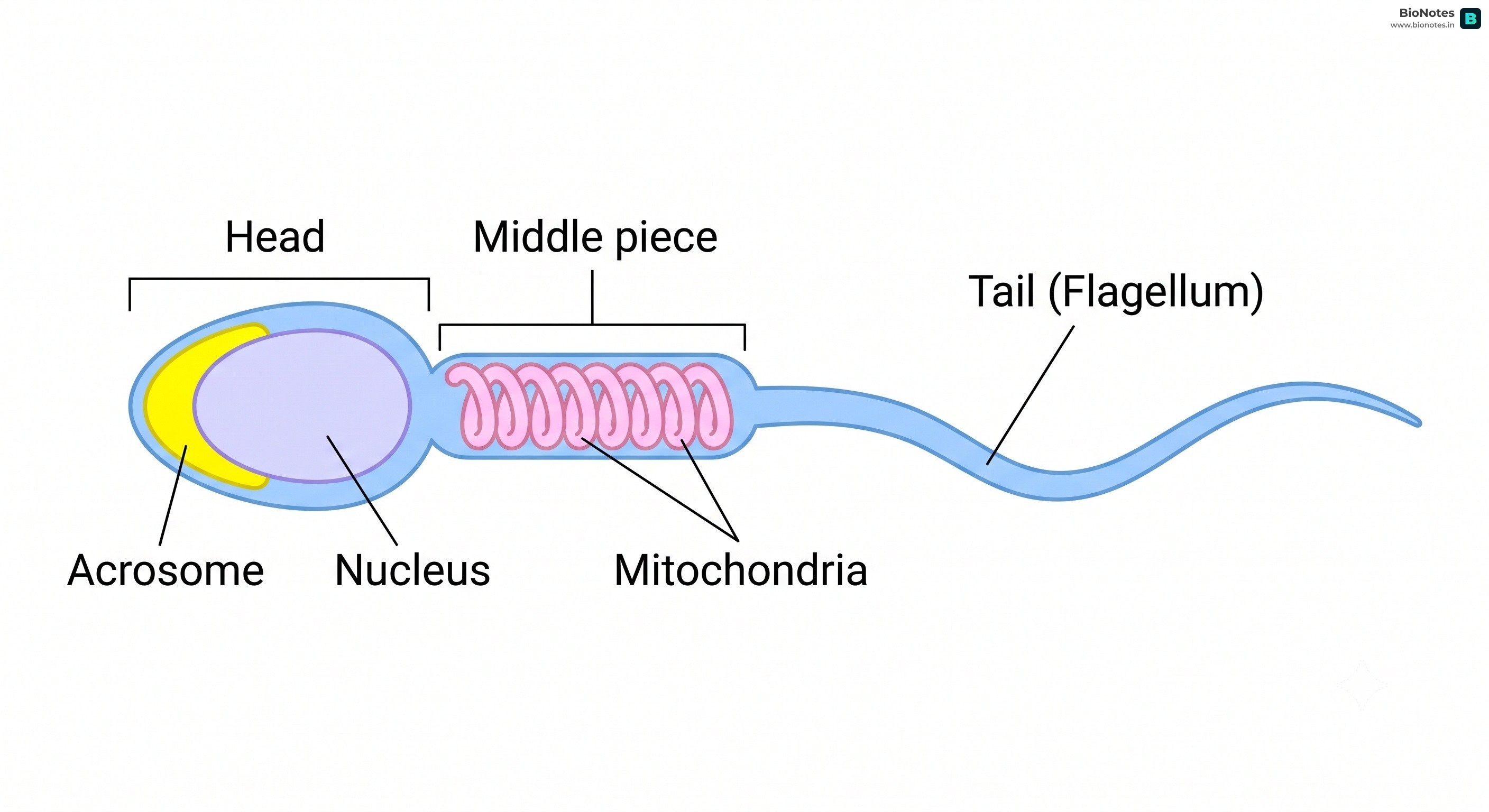
(v) [3] 1 mark for correct diagram, 2 marks for any four correct labels.
(ii) [2] Before industrialisation, light-coloured moths were camouflaged on lichen-covered tree trunks, while dark moths were easily eaten by birds [1]. After industrial pollution blackened the tree trunks, dark moths were better camouflaged and survived, while light moths were eaten; hence the dark form increased (survival of the fittest) [1].
(iii) [2](any two) Bipedalism/erect posture; increase in cranial capacity; reduction in size of canine teeth; reduction of brow ridges; development of chin; reduction in body hair.
(iv) [2] (a) Demography: the statistical study of human populations (size, density, birth and death rates, etc.) [1]; (b) Population density: the number of individuals per unit area [1].
(v) [3](any three) Unemployment; over-exploitation of natural resources; low per capita income; rise in prices; pollution; unequal distribution of wealth; shortage of food, housing and healthcare.
Diagrams in the marking scheme are from the BioNotes diagram bank. Question–answer design by the BioNotes teaching team; syllabus alignment: CISCE ICSE 2027 Biology (Science Paper 3).