Class 12
Created by Titas Mallick
Biology Teacher • M.Sc. Botany • B.Ed. • CTET (CBSE) • CISCE Examiner
 BioNotes
Created by Titas Mallick
Biology Teacher • M.Sc. Botany • B.Ed. • CTET (CBSE) • CISCE Examiner
Online
Common Misconceptions
Watch Out! Evolutionary theory is often misinterpreted in pop culture. Remember:
Evolution is the process of gradual change in the characteristics of a population of organisms over successive generations, leading to the development of new species from pre-existing ones. It is a slow, continuous, and irreversible process.
Abiogenesis (Spontaneous Generation): The discredited theory that life arose spontaneously from non-living matter (e.g., maggots from decaying meat).
Biogenesis: The theory that life arises only from pre-existing life (Louis Pasteur's experiment disproved spontaneous generation).
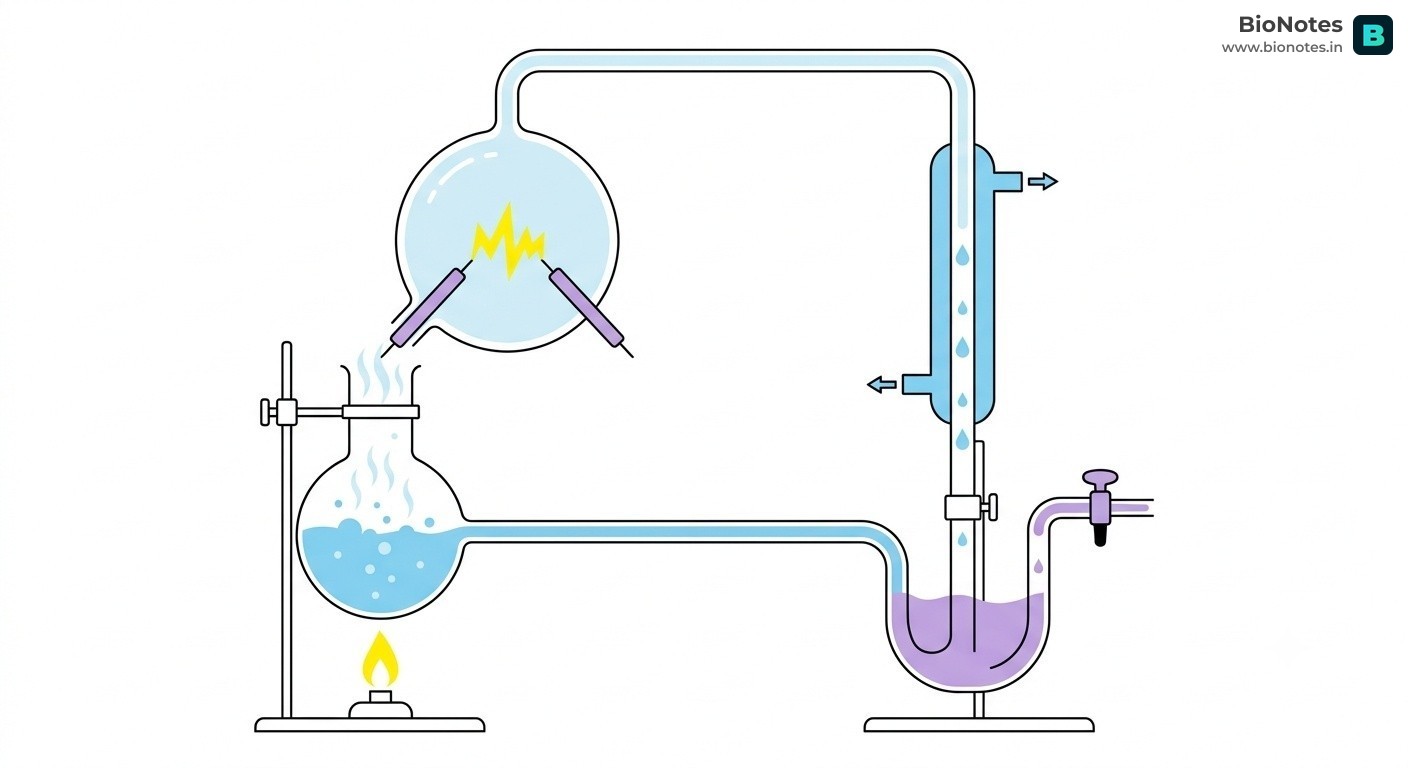
Oparin-Haldane Theory (Chemical Evolution):
Miller-Urey Experiment (1953):
 www.bionotes.in
 www.bionotes.in
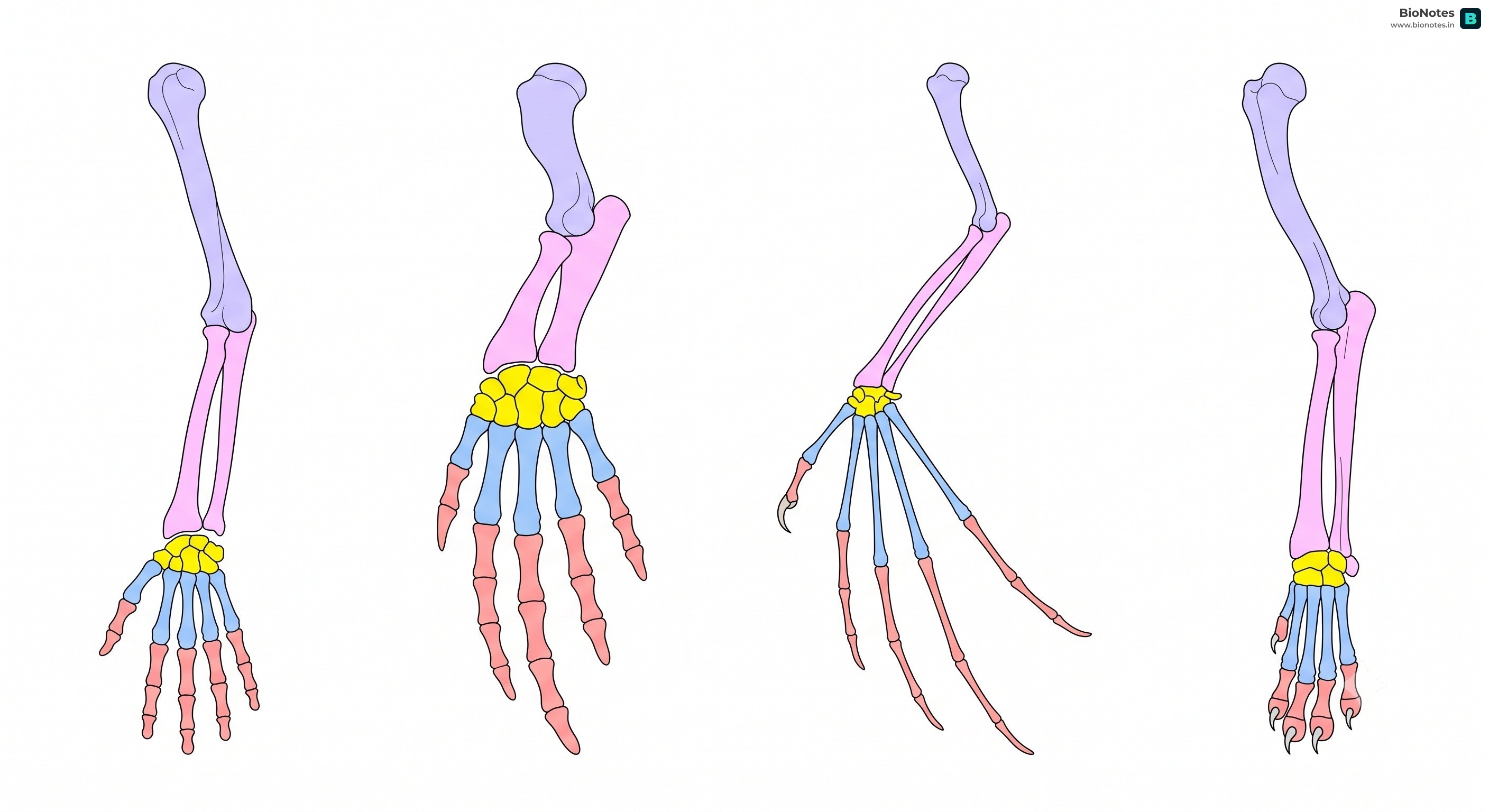
Common Ancestry Homologous organs are proof of Divergent Evolution. For example, the same set of bones in a human's hand and a whale's flipper shows we both evolved from a common four-limbed ancestor.
Competitive Edge: The Potato Paradox A classic exam trap involves comparing a Sweet Potato and a Potato. They both grow underground and store starch (same function), but a Sweet Potato is a root modification while a Potato is a stem modification (different origins). Therefore, they are Analogous Organs (Convergent Evolution), not homologous!
Embryological Evidences:
Palaeontological Evidences:
Biogeographical Evidences:
Molecular Evidences:
p is the frequency of the dominant allele (A) and q is the frequency of the recessive allele (a), then p + q = 1.
When expanded as a binomial :
p² = frequency of homozygous dominant genotype (AA)q² = frequency of homozygous recessive genotype (aa)2pq = frequency of heterozygous genotype (Aa)Competitive Edge: The 5 Conditions for Equilibrium Hardy-Weinberg equilibrium ONLY holds true if all 5 conditions are met:
If any of these 5 conditions are violated, evolution is occurring!
Natural selection can lead to different patterns of phenotypic change in a population:
Directional Selection:
Disruptive Selection:
Stabilizing Selection:
 www.bionotes.in
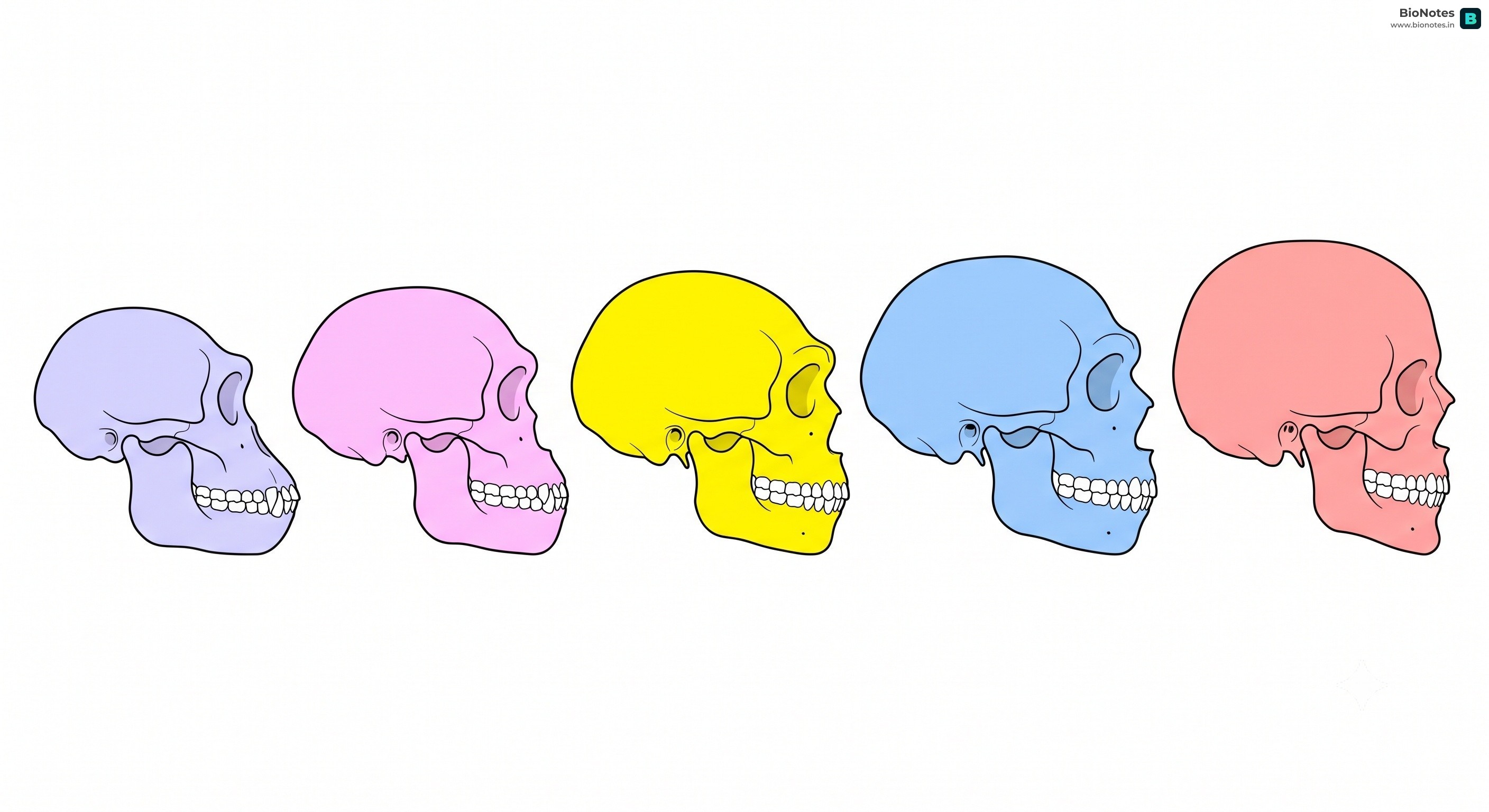
Human evolution is a complex process influenced by genetic changes, environmental pressures, and cultural developments. The fossil record provides crucial insights into this journey.
NGSS-HS-LS4-2AQA-ALevel-3.4.6IB-Biology-5.1